Rosewool Insulation Refractory Co.,Ltd.

Your Position: Home > About us > News > Company News

What are the differences between different models of nano insulation boards

Release Time: 2025-07-25
Share:
In the field of industrial insulation, choosing the right model of nano-insulation board is equivalent to equipping production efficiency with an "invisible shield". As a powerful manufacturer specializing in insulation refractory materials, Rosewool's nano-insulation board series, with its advantage of model segmentation, has become the ideal choice for different scenarios.


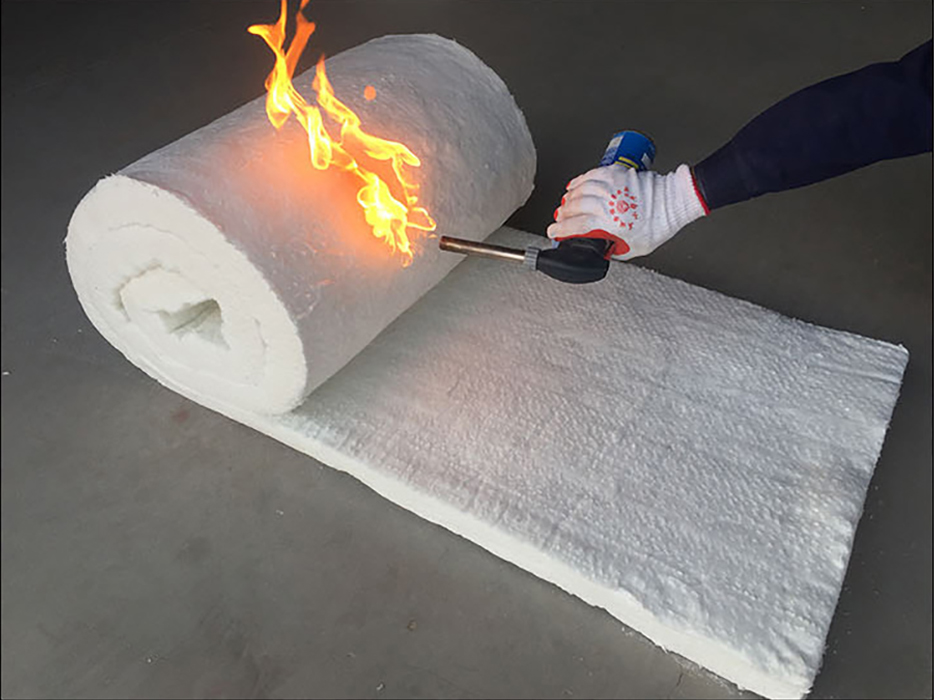
Rosewool's nano-insulation board is a new material manufactured using the latest high-tech technology. It is made of special inorganic refractory powder, forming tiny super pores, and its thermal conductivity is even lower than that of still air. Compared to traditional fiber-based insulation materials, it is 2-3 times better; it is widely used in the steel industry, petroleum industry, glass, marine ships, ceramics, and aerospace industries;


Technical Parameters

Items JDN-1 Nano Insulation Board JDN-II Nano Insulation Board JDN-H Nano Insulation Board
Color Grey Grey White
Melting Point >1200℃ >1200℃ >1200℃
Maximum Operating Temperature 1000℃ 1000℃ 1100℃
Bulk Density 600kg/m³±10% 600kg/m³±10% 300±10% kg/m³
Linear Shrinkage(900℃*3h) ≤-1% <-1% ≤-1%
Thermal Conductivity 300℃   ≤0.02W/m.k ≤0.02W/m.k
600℃ ≤0.052W/m.k ≤0.04W/m.k ≤0.030W/m.k
1000℃ ≤0.085W/m.k ≤0.065W/m.k ≤0.038W/m.k


Different models of nano-insulation boards differ primarily in terms of temperature resistance, thermal conductivity, physical form, and bulk density. Thermal conductivity determines energy-saving efficiency, while form and density adapt to installation scenarios. Temperature resistance gradient defines the application boundary. Nano-insulation board models are divided into DN950, DN1000, and DN1100. Among them, the DN950 model is lightweight and has a low thermal conductivity, making it the preferred choice for expansion;

Every model difference in Rosewool's nano-insulation board reflects a deep insight into industrial scenarios. From component ratios to dimensional tolerances, from rigid boards to flexible felts, we employ a customized approach to ensure that insulation solutions seamlessly align with equipment needs, injecting technological energy into your production to reduce costs and increase efficiency.

Also Read

rock wool board

What is the hydrophobicity of cement long exterior wall insulation rock wool board?

What is the hydrophobicity of cement long exterior wall insulation rock wool board? Hydrophobic refers to liquid water (such as rainwater), while hygroscopic refers to gaseous water (such as water vapor in the air). The working environment of cement plants has high humidity. When purchasing, it is recommended to pay attention to indicators such as water repellency rate ≥ 98% and moisture absorption rate ≤ 1.0%. Rosewool Insulation Refractory Co.,Ltd.  provides insulation materials for various industrial plants, with support solutions for external and internal insulation. There are countless cooperation cases with cement plants, and the reputation of rock wool board cooperation customers is excellent, worthy of your trust!

View More >>
calcium silicate board

Non asbestos calcium silicate board, fire-resistant insulation material

Non asbestos calcium silicate board, fire-resistant insulation material? On the big stage of industrial production, tunnel kilns are undoubtedly a pivotal "protagonist". It is widely used in many fields such as ceramics, refractory materials, and building materials, and shoulders the key mission of transforming various raw materials into finished products. Its continuous and efficient production method greatly improves production efficiency and reduces production costs.
View More >>
ceramic fiber blanket

What is the cost of a ceramic fiber blanket containing zirconium to withstand a high temperature of 1300 degrees Celsius?

What is the cost of a ceramic fiber blanket containing zirconium to withstand a high temperature of 1300 degrees Celsius? Zirconium containing aluminum silicate ceramic fiber blanket that can withstand high temperatures above 1300 degrees. Zirconium containing ceramic fiber blanket is a flexible lightweight refractory insulation material made by adding 12% -20% zirconia component to ordinary aluminum silicate (alumina silica) fibers through processes such as resistance furnace melting, spinning into fibers, and needle punching.
View More >>

Send Enquiry Now

sales@rosewool.com
+86 13674954566
+86 13674954566
Speak To Our Team
Name:
Country :
*Email:
*Phone/Whatsapp:
*Inquiry:
X