Rosewool Insulation Refractory Co.,Ltd.

Your Position: Home > About us > News > Industry Knowledge

Aluminum foil rock wool blanket pipeline protection usage method

Release Time: 2026-02-02
Share:
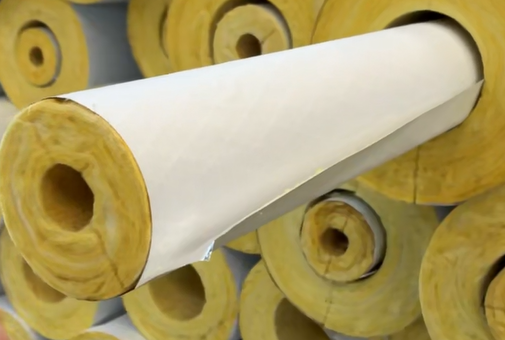
How to use aluminum foil rock wool blanket pipeline protection? Aluminum foil rock cotton blanket is a type of blanket made by overlaying aluminum foil on top of rock cotton blanket. It can be divided into single-sided aluminum foil and double-sided aluminum foil; Combined with the user's usage scenarios and functional requirements, the density of aluminum foil rock cotton blankets varies and their functions are differentiated. Rosewool Insulation Refractory Co.,Ltd aluminum foil rock cotton blanket combines the insulation and fire resistance of rock wool with the moisture-proof and reflective heat radiation characteristics of aluminum foil. It is widely used in pipeline protection, especially suitable for scenarios that require insulation, fire prevention, and may come into contact with humid environments.
                                                                  

Key construction issues for aluminum foil rock wool blanket pipeline protection

1. Moisture and Waterproof: Although rock wool is hydrophobic, prolonged immersion can still affect its performance. Ensure that the materials are dry during and after construction. Outdoor or humid environment construction should complete the outer protective layer as soon as possible to prevent rainwater from entering.
2. Strict sealing: The quality of aluminum foil tape adhesion is the key to ensuring insulation and moisture resistance. It must be compacted, leveled, without bubbles or openings. All seams should be covered. The insulation material should be in close contact with the pipeline wall and between each layer of insulation material to minimize gaps and reduce convective heat loss.
3. Security protection:
When cutting rock wool, small fibers will be generated, so it is necessary to take personal protective measures.
The workplace should have good ventilation.
Clean up the site promptly after construction to avoid fiber scattering.
4. Layered insulation: When the thickness of the insulation layer is designed to be thick (usually exceeding 8-10cm per layer), multiple layers of staggered wrapping should be used to reduce joint heat loss and improve structural stability.
5. Support and spacing: For horizontal large pipelines, the lower insulation layer may sink due to its own weight, and insulation support rings (usually made of galvanized steel plates) need to be installed at the bottom of the pipeline to prevent the insulation layer from collapsing.

Technical Parameters

Performance Indicators
Shot content ( Particle diameter ≥0.25mm) ≤ 12.0 %
The average diameter of fiber ≤7.0 μm
Density Tolerance ± 15%
Thermal Conductivity ( average temperature 70℃±52℃),W/(m/K) ≤ 0.044
Thermal load contraction temperature (more than 60kg/m3) ≤ 600 ℃
Moisture ≤0.5%
Combustion performance Not burning (Class A)
Organic content ≤ 4.0%


How to use aluminum foil rock wool blanket pipeline protection? The aluminum foil rock wool blanket pipeline insulation project has achieved the expected effects of insulation, energy saving, anti condensation, and prolonging pipeline life. For large or important projects, relevant design specifications and construction acceptance standards should be strictly followed. Rosewool Insulation Refractory Co.,Ltd Company has been deeply involved in the field of insulation and refractory materials for over 40 years, with cooperation covering industries such as cement, chemical, power, and steel, and rich case experience. Serving large enterprises such as the five major power generation groups, our reputation and credibility have been verified by the market. Provide one-stop services from solution design, product production to installation guidance, reducing customer coordination costs.


Also Read

customized rock wool board

How to Choose the Density of Custom rock Wool Boards: A Guide for Optimal Performance (With Recommended Densities by Application)

When it comes to custom rock wool boards, density is far more than just a technical specification—it’s the key factor that determines insulation performance, structural durability, and cost-efficiency. Whether you’re insulating a residential roof, a commercial wall, or industrial machinery, selecting the right density ensures your project meets both performance goals and budget constraints. In this guide, we’ll break down how density impacts rock wool boards, share recommended ranges for common applications, and provide actionable tips to choose the perfect density for your needs.
View More >>
 magnesia stone composite insulation board

Aluminum plant electrolytic cell magnesia stone composite insulation board

Aluminum plant electrolytic cell magnesia stone composite insulation board is a very specific and professional product, mainly used for energy-saving transformation in the aluminum electrolysis industry. Natural brucite is a hydrated magnesium hydroxide mineral. High performance, multi-layer composite insulation materials designed for aluminum electrolytic cells, especially at the bottom of the cathode. Its core component is light burned brucite powder made from natural brucite through processes such as crushing, beneficiation, and calcination, which is then compounded with other functional materials (such as refractory fibers, expanded perlite, etc.) and pressed into plate-like products. The core purpose of the magnesia stone composite insulation board is to minimize the heat loss of the electrolytic cell to the ground, thereby reducing energy consumption, stabilizing the thermal balance inside the cell, and extending the cell life.
View More >>
hard calcium silicate stone

Technical parameters of hard calcium silicate stone with a density of over 500

What are the technical parameters for hard calcium silicate stone slabs with a density of over 500? Hard silica calcium stone slab is a common insulation material. The main raw materials of hard silica calcium stone slab are calcium hydroxide and quartz sand, which are generated by high-temperature and high-pressure hydrothermal reaction. The size can be customized according to the needs of use, and it has the characteristics of high temperature resistance, good insulation, high strength, fire insulation, low thermal conductivity, and excellent thermal shock resistance. The finished hard silica calcium stone slab can withstand a high temperature of 1050 ℃.
View More >>

Send Enquiry Now

sales@rosewool.com
+86 13674954566
+86 13674954566
Speak To Our Team
Name:
Country :
*Email:
*Phone/Whatsapp:
*Inquiry:
X