Analysis on the effect of moisture on thermal insulation material aerogel felt and its drying recovery
Release Time: 2026-11-10
Share:
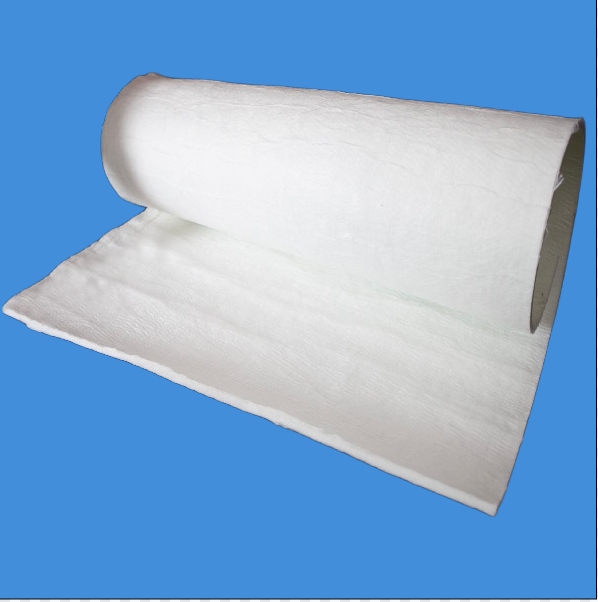
In the thermal insulation engineering of power plants, aerogel felt is widely used in places with limited space and high thermal insulation requirements such as steam turbine cylinder block, main steam pipe, high-temperature valve, etc., due to its extremely low thermal conductivity (as low as 0.018-0.021 W/(m · K)) and ultra-thin and efficient thermal insulation performance. However, once the aerogel felt is damped, its performance will be seriously affected. Rosewool Insulation Refractory Co.,Ltd. provides you with a detailed analysis.
1、 Application position and functional effect of aerogel felt in power plant
Aerogel felt is mainly used in the following key parts in power plants:
Steam turbine cylinder body: With a thickness of only 1/3-1/2 of traditional materials, the same insulation effect can be achieved, reducing the load on the cylinder body
Main steam pipeline and high-temperature valve: ultra-thin and flexible design, can tightly fit complex shapes
SCR reactor and flue: hydrophobic aerogel felt can resist smoke corrosion
Its core functional effects include: extreme insulation (thermal conductivity only 1/3-1/5 of traditional materials), lightweight and space saving, A-level non combustible, overall hydrophobicity (hydrophobicity rate ≥ 99%), and convenient construction.
2、 Serious consequences of moisture on aerogel felt
Although the aerogel felt itself has overall hydrophobicity, the following problems will still occur in the case of long-term immersion, repeated condensation or continuous water intrusion caused by the damage of the outer sheath:
1. The thermal conductivity increases sharply, and the insulation performance drops sharply
The thermal insulation core of aerogel felt is that its nano porous structure locks static air. Once moisture invades the pores, the thermal conductivity of water (about 0.6 W/(m · K)) is 23 times that of still air (about 0.026 W/(m · K)), which directly leads to the loss of insulation effect. After being dampened, the thermal conductivity may increase from 0.020 to above 0.10 W/(m · K). 2. Decreased structural strength, prone to powdering and detachment
The flexibility of aerogel felt comes from the composite structure of inorganic fiber skeleton and aerogel. Long term soaking in water can weaken the bonding force between fibers, leading to a decrease in the strength of the felt, and making it more prone to damage and powder loss in a vibrating environment. 3. Increased risk of equipment corrosion
The metal wall surface under the insulation layer is exposed to a humid environment for a long time, which is prone to corrosion under the insulation layer (CUI), especially in the sulfur-containing flue gas environment of power plants, which can accelerate equipment corrosion and shorten the service life. 4. The shell temperature exceeds the standard, resulting in an increase in energy consumption
After being affected by moisture, insulation may fail, and the temperature of the equipment casing may far exceed the design value (required to be ≤ 50 ℃), which not only causes heat loss but also poses a safety hazard of burns. 5. Significantly shortened service life
Repeated wetting drying cycles will lead to gradual deterioration of the aerogel structure and eventual failure, which will require replacement in advance and increase maintenance costs. 3、 Can the performance of air gel felt recover after drying due to moisture? Conclusion: Partial recovery, but unable to fully restore to initial performance.
The surface is slightly damp (not soaked for a long time), and after drying, the thermal conductivity can be restored to 85% -95% of the initial value, and the appearance is basically normal
Moderately damp (with some pore water ingress), the thermal conductivity recovers to 70% -85% after drying, and there may be slight powdering
After severe soaking (long-term water immersion or repeated moisture exposure) and drying, the thermal conductivity only recovers to 50% -70%, and the structural damage is irreversible. It is recommended to replace it Advantages of choosing to cooperate with Rosewool Insulation Refractory Co.,Ltd.:
Directly supplied by the source manufacturer, regular specifications can be shipped within 72 hours, and the price advantage of bulk purchase is obvious
Through ISO9001 certification, we provide third-party testing reports with guaranteed quality
Our products are exported to more than 80 countries and regions, serving large power enterprises such as Huaneng and Huadian
Provide full process technical support from selection, thermal calculation to installation guidance