Rosewool Insulation Refractory Co.,Ltd.
Your Position: Home > About us > News > Industry Knowledge

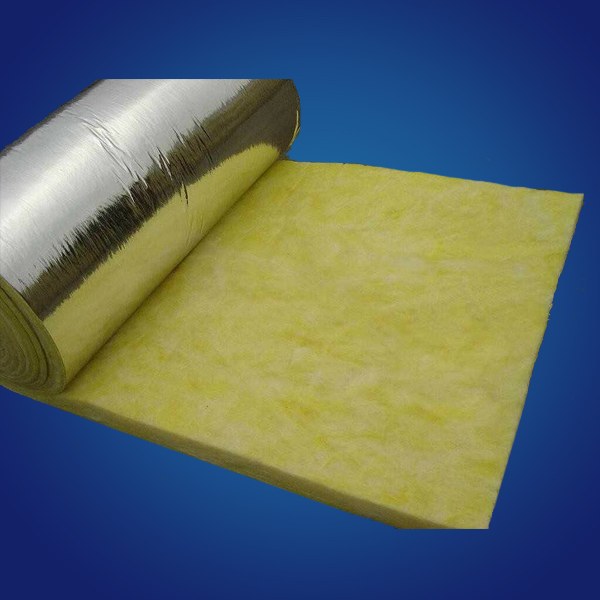
Cement plant pipeline insulation glass wool felt

Release Time: 2026-02-27
Share:
Cement plant pipeline insulation glass wool felt? As a manufacturer of Rosewool Insulation Refractory Co.,Ltd, we are well aware of the strict requirements of cement plant pipeline systems for insulation materials - they need to meet multiple standards such as efficient insulation, high temperature resistance, corrosion resistance, and ease of construction. Therefore, we recommend our high-quality glass wool felt, which is a professional solution designed to cope with the complex industrial environment of this type.
                                                                                 

Introduction to the functional advantages of insulated glass wool felt:

1. Excellent thermal insulation
Rosewool Insulation Refractory Co.,Ltd. glass wool felt adopts a fine interwoven structure of glass fibers, containing a large number of tiny pores inside, which can greatly block heat transfer. For various types of thermal pipelines in cement plants, it can significantly reduce heat loss, maintain stable medium temperature, directly reduce production energy consumption, and save operating costs.
2. Excellent temperature resistance and fire safety
The product can withstand temperatures of up to 400 ℃ for a long time, perfectly fitting high-temperature environments such as waste heat pipelines and hot air pipelines in cement plants. At the same time, the material itself is an A1 level non combustible material, which does not produce toxic smoke when exposed to fire, providing crucial safety guarantees for the key fire prevention area of the cement plant.
3. Excellent chemical stability and durability
Glass wool has stable composition and good resistance to common weak acid and alkali environments and humid climates in pipelines. It is not easy to pulverize and has slow performance degradation. Combined with a professional outer protective layer, it can effectively resist the erosion of cement plant dust and complex working conditions for a long time, ensuring long-lasting insulation effect.
4. Lightweight and smooth, convenient and efficient construction
The product has a gentle texture, is easy to cut and bend, perfectly fits the pipeline (including complex parts such as valves and elbows), and is easy to install. This can not only improve construction efficiency and shorten the construction period, but its excellent acoustic performance can also assist in reducing the noise generated by the pipeline system and improving the working environment.
5. High cost-effectiveness and localized service advantages
As a manufacturer rooted in Zhengzhou, we can provide you with fast response and timely supply guarantee based on our geographical advantages. Combining professional technical selection suggestions and after-sales service, we are committed to providing you with a cost-effective one-stop insulation solution and becoming your reliable long-term partner.

Cement plant pipeline insulation glass wool felt? Choosing Rosewool Insulation Refractory Co.,Ltd's glass wool felt is not only about choosing a high-quality material, but also a solid commitment to energy efficiency improvement and safety production. We look forward to providing professional products and services to help your factory achieve green, efficient, and smooth operation.


 

Also Read

60cm rock wool pipe shell

Functional advantages of 60cm rock wool pipe shell for industrial kilns

What are the functional advantages of industrial kiln rock wool pipe shells? The 60cm rock wool pipe shell, which is matched with industrial kilns, has become the preferred material for industrial pipeline insulation, heat insulation, and fire prevention due to its core performance of adapting to high-temperature conditions of kilns. Rosewool Insulation Refractory Co.,Ltd rock Wool Pipe Shell, as the core material in the field of pipeline insulation, is made of natural basalt as the basic raw material and crafted with multiple precision processes. Firstly, the basalt is subjected to high-temperature shrinkage. At extreme high temperatures of 1450 ° C and 1500 ° C, it melts into a liquid state and is then instantly stretched into artificial inorganic fibers with a diameter of only a few micrometers using high-speed centrifugation. During the fiber forming process, a special adhesive and oil resistant technology are precisely proportioned and injected to ensure that the fibers have good anti dust properties when bonded to each other. Finally, through high-temperature curing technology, the pipes are made bright and shaped. According to different pipeline specifications and insulation requirements, a variety of rock wool insulation pipes are produced.
View More >>
ceramic fiber  plus blanket

What is the difference between ceramic fiber blanket plus blanket and international Morgan blanket?

What is the difference between ceramic fiber blanket plus blanket and international Morgan blanket? Rosetexwool's ceramic fiber blanket PLUS blanket refers to various insulation and refractory products with high temperature resistance, low thermal conductivity, lightweight, thermal shock resistance, sound absorption and other characteristics made from hard clay clinker, coke gemstone, alumina silica powder and other raw materials, melted in a high-temperature resistance furnace (above 1600 ℃), blown/spun into fiber cotton, and processed through different processes (needle punching, heat setting, cross cutting, rolling, etc.). Its core is to utilize the microstructure of ceramic fibers (fibers interwoven to form a porous and loose structure) to achieve efficient insulation, better thermal insulation, and more stable structure under high temperature environments, widely applicable to industrial high temperature working conditions and fire protection scenarios.
View More >>
hard calcium silicate materials

Introduction to the functions of high-temperature resistant and environmentally friendly hard calcium silicate materials in glass factories

Introduction to the functions of high-temperature resistant and environmentally friendly materials made of hard calcium silicate in glass factories? Hard calcium silicate belongs to a type of hydrated calcium silicate material. Its own composition and characteristics show fibrous or needle shaped crystal morphology. Among many hydrated calcium silicate minerals, its crystal water content is relatively low, while it has excellent high-temperature stability and can withstand high temperature environments of 600 to 1000 ℃. For glass factory applications, hard calcium silicate stone (usually in the form of calcium silicate boards/pipes) is an excellent insulation material for medium and high temperature zones. 
View More >>

Send Enquiry Now

sales@rosewool.com
+86 13674954566
+86 13674954566
Speak To Our Team
Name:
Country :
*Email:
*Phone/Whatsapp:
*Inquiry:
X