What is the thermal insulation effect of nano aerogel felt?
Release Time: 2025-12-25
Share:
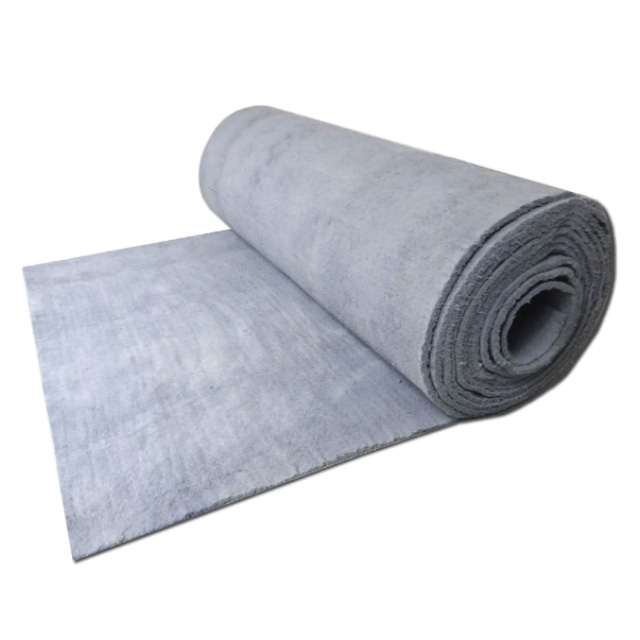
What is the thermal insulation effect of nano aerogel felt? Nano aerogel felt has excellent thermal insulation performance. The thermal insulation effect of nano aerogel felt is far superior to that of traditional thermal insulation materials. With the unique advantages of nano porous structure, it has become the "heat insulation ace" under severe conditions such as industrial high temperature and deep cold. The specific functional effects can be expanded from the following core dimensions: 1. Extremely low thermal conductivity, insulation efficiency surpasses traditional materials
The core component of nano aerogel felt is silica aerogel, with more than 90% nano pores inside, and the pore size is far smaller than the free path of air molecules, which can maximize the resistance to heat conduction, convection and radiation.
At room temperature, its thermal conductivity is as low as 0.018-0.025W/(m · K), which is only half of rock wool (0.04-0.05W/(m · K)) and 60% -70% of ceramic fiber cotton (0.03-0.06W/(m · K)). Under the same thermal insulation effect, the laying thickness of aerogel felt is only 1/3 – 1/2 of that of traditional materials, which can greatly save equipment installation space.
2. Wide temperature range stable adaptation, capable of operating under both high and low temperature conditions
The temperature resistance range of conventional nano aerogel felt covers -200 ℃~650 ℃, and the modified high temperature resistant model can reach more than 1000 ℃. It can not only be used for cold insulation of cryogenic equipment such as liquid nitrogen and liquid oxygen, but also meet the thermal insulation requirements of power station boilers, metallurgical kilns, and high-temperature pipes.
More importantly, in extreme temperature difference environments, its thermal conductivity does not fluctuate significantly and maintains stable insulation performance, far superior to rock wool that is prone to moisture failure at low temperatures and calcium silicate with a sudden increase in thermal conductivity at high temperatures.
3. Hydrophobic and moisture-proof, does not decay in humid environments
High quality nano aerogel felt has been treated with hydrophobicity, and the hydrophobicity rate can reach more than 98%. Even if it is in a humid and high humidity environment for a long time, it will not absorb moisture.
However, traditional insulation materials such as rock wool and glass wool will experience a decrease of over 50% in insulation performance after absorbing water, which can also lead to equipment corrosion; Air gel felt can avoid this problem, especially suitable for wet conditions such as chemical engineering, marine engineering and underground engineering.
4. Anti thermal shock+lightweight flexibility, more worry free construction and maintenance
The volume weight of the aerogel felt is only 180 – 300kg/m ³. It is soft and flexible, and can be directly wrapped on the surface of complex structures such as special-shaped pipes, valves, and equipment flanges. It can be cut and pasted without complex formwork, greatly improving the installation efficiency.
At the same time, its coefficient of thermal expansion is extremely low, able to withstand frequent temperature fluctuations, and will not crack or fall off due to thermal expansion and contraction like hard castables. Its service life is 2-3 times longer than traditional materials, reducing maintenance costs in the later stage.
5. Environmentally friendly and flame-retardant, with safety performance meeting standards
The main component of nano aerogel felt is inorganic silicon dioxide, which does not contain asbestos, formaldehyde and other harmful substances. Its combustion performance has reached the Class A non combustible standard. It will not release toxic gases at high temperatures. It meets the requirements of industrial environmental protection and fire safety, and is especially suitable for chemical, electric power and construction fields that have strict requirements for environmental protection and safety.
What is the thermal insulation effect of nano aerogel felt? Nano aerogel felt is a "high efficiency and energy saving benchmark" for industrial insulation. The products of Rosewool Insulation Refractory Co.,Ltd have ultra-low heat conduction of<0.018W/(m ・ K), wide temperature range stability of -200 ℃~1000 ℃, 99.5%+hydrophobic and lightweight flexibility, and can save energy significantly under severe working conditions such as high temperature/deep cold/humidity. Combining local delivery and customized technical services, it is the best choice for industrial insulation upgrading.