Rosewool Insulation Refractory Co.,Ltd.


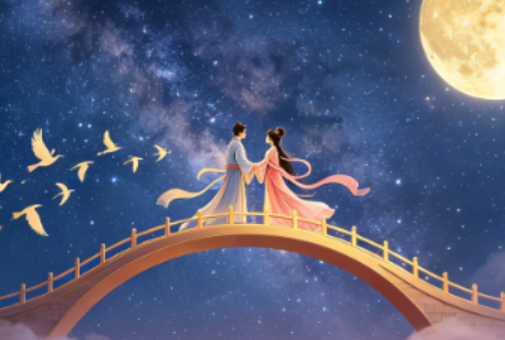
The origin of Qixi can be traced back to the worship of stars in ancient times. The ancients personified the Cowherd and Weaver Girl stars, combined with the social background of men farming and women weaving, to create the love legend of the Cowherd and Weaver Girl. In the Nineteen Ancient Poems of the Han Dynasty, there is a description of "Altair far away, Han women in the Jiaojiao River". The story of "Zhinv crossing the river on Qixi, making magpies a bridge" is recorded in the Customs Tongyi by Ying Shao of the Eastern Han Dynasty. In the Wei, Jin, Southern and Northern Dynasties, Qixi officially became a folk festival, while in the Song Dynasty, it was designated as a legal holiday.
In ancient times, the theme of Qixi was not love, but a "grand gathering of women begging for skills". Women are threading needles and threads under the moon, and whoever dresses quickly and skillfully is considered "clever"; There are also forms such as the Joyful Spider Response Technique and the Needle Testing Technique. In addition, there are various customs such as worshiping the Weaver Girl, praying for mental agility, eating skillful fruits, and drying books and clothes.
Today, the legend of Niulang and Zhinv endows Qixi with romance, and Qixi is generally regarded as "Chinese Valentine's Day". Contemporary people wear Hanfu, visit markets, and experience intangible cultural heritage handicrafts, using tradition to alleviate the "romantic fatigue" in modern life. Qixi has also moved from a single emotional expression to a diversified ecology covering cultural tourism, intangible cultural heritage experience, etc.
Millennium begging for skills, romantic inheritance. Today's Qixi Festival, I hope lovers will get married and a better life will come as promised.