Corrosion pain points and recommended insulation solutions for external insulation of SCR denitration area in power plants
Release Time: 2026-11-13
Share:
What are the pain points and recommended insulation solutions for external insulation corrosion in SCR denitrification areas of power plants? The SCR denitration reactor, flue and connecting pipelines in power plants have complex working conditions and are high-risk areas for insulation and anti-corrosion failures. The two most prominent types of corrosion problems in the external insulation of this area are "condensation acid corrosion" and "dew point corrosion (accompanied by electrochemical corrosion)", which are also the main causes of premature failure of insulation layers and steel plate corrosion and perforation in many projects.
The operating temperature of the SCR system is generally between 300-400 ℃, with significant fluctuations in the start-up and shutdown conditions. During low load and shutdown maintenance phases, the wall temperature rapidly decreases. The residual SO ₂, SO ∝, NO ₓ in flue gas combine with water vapor to generate acidic media such as sulfuric acid and sulfurous acid. When the wall temperature of the equipment is lower than the acid dew point temperature, acidic condensate precipitates and penetrates into the insulation layer, forming "condensation acid corrosion". Long term infiltration of acidic liquids into insulation materials can cause ordinary insulation to pulverize, collapse, and increase in thermal conductivity, while continuously corroding the outer protective plate and equipment casing. The second type is "dew point induced electrochemical corrosion": after the insulation layer is filled with water (rainwater, maintenance seepage, condensation water), water, oxygen, and acidic ions jointly form the original battery. Even if the acid concentration is not high, it will accelerate the corrosion of carbon steel shells and supports. Many projects have intact insulation but corroded shells, and the root cause is insufficient water resistance and acid resistance of the insulation system. Conventional rock wool and aluminum silicate ordinary blankets have limited acid resistance, and are prone to moisture absorption and pulverization under SCR alternating working conditions for a long time. After insulation failure, it further exacerbates the vicious cycle of corrosion.
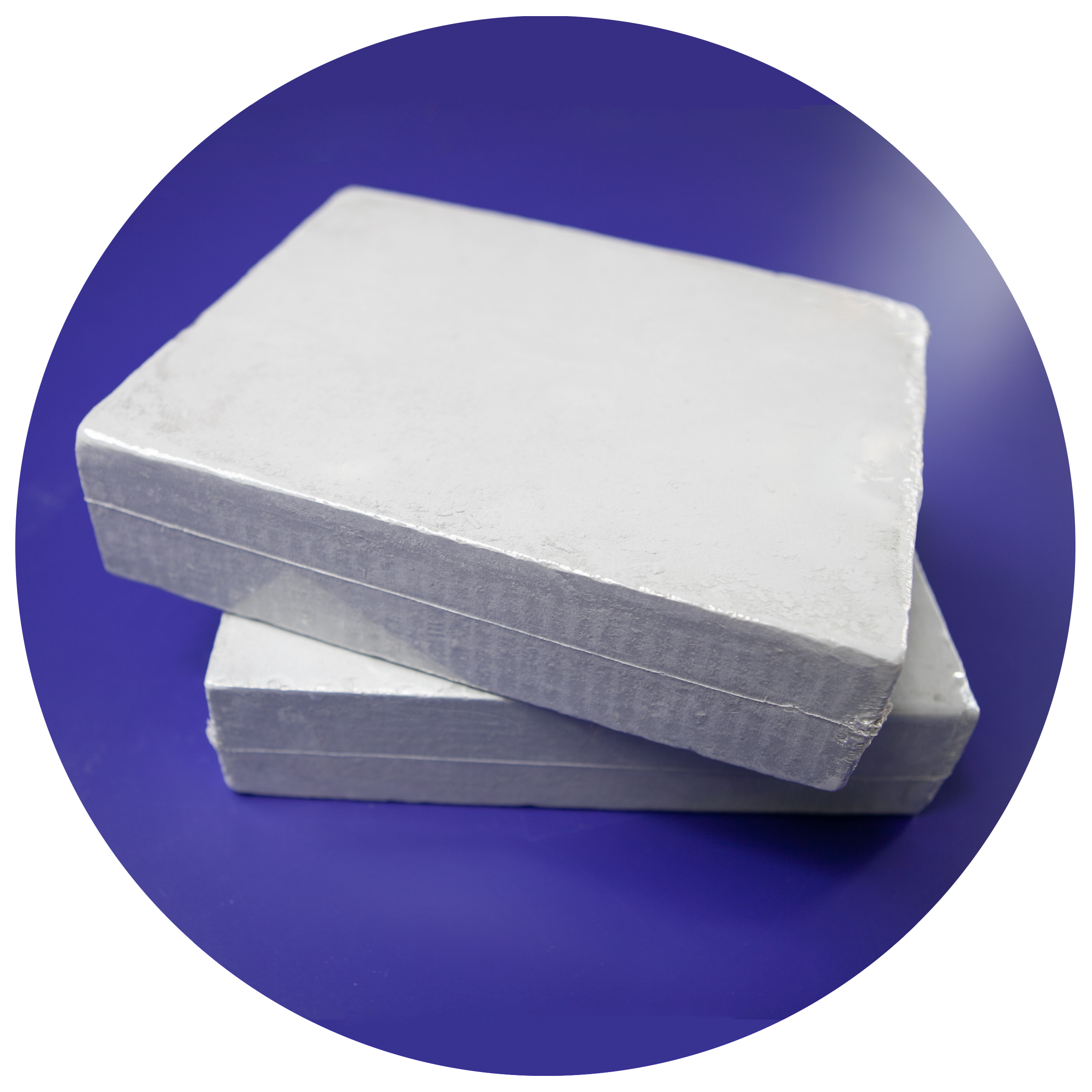
Rosewool Insulation Refractory Co.,Ltd. dedicated to Power Plant denitration SCR area thermal insulation supporting materials can provide a complete set of adaptive thermal insulation refractory materials for the corrosion and high temperature problems under this working condition, mainly promoting "ceramic fiber blanket, ceramic fiber PLUS blanket", and supporting modules, plates, ropes, nano aerogel felt and other products to adapt to SCR reactor, flue, deflector, support and other different locations.
Our ceramic fiber blanket has a temperature resistance of up to 1260 ℃, low thermal conductivity, stable fiber structure, excellent thermal shock resistance, and is not easily delaminated or fragmented under repeated temperature shocks during furnace start-up and shutdown. It has good chemical stability and good resistance to weak acid environments. The basic version is suitable for SCR stable high-temperature insulation, effectively reducing outer wall temperature, lifting equipment wall temperature, and staying away from acid dew points. The upgraded "Ceramic Fiber PLUS Blanket" is the preferred choice for SCR working conditions. It optimizes the formula based on the original fiber, improves the ability to resist crystallization and acid erosion, has stronger hydrophobicity, higher fiber toughness, and is less prone to slag and powdering. It has obvious advantages in units with load fluctuations and frequent starts and stops, greatly reducing the damage of acidic condensate to the insulation body and delaying shell corrosion.
For local areas with high corrosion risk, narrow space and limited insulation thickness, we are equipped with nano aerogel felt with ultra-low thermal conductivity. With the same insulation effect, the thickness is thinner, hydrophobic, non absorbent, acid resistant and anti-aging, and can block the penetration of water vapor and acid solution; At the same time, it can be matched with ceramic fiber modules, fiberboards, sealing ropes, etc., used for flanges, expansion joints, supports and other irregular, heat leakage and condensation prone positions, achieving seamless insulation and sealing in all positions.
What are the pain points and recommended insulation solutions for external insulation corrosion in SCR denitrification areas of power plants? All products of Rosewool Insulation Refractory Co.,Ltd. are strictly produced in accordance with national standards, with stable dimensions and convenient construction. We can provide technical guidance for supporting construction, from material selection and thickness calculation to one-stop output of anti dew point and anti-corrosion supporting solutions.
We not only supply insulation materials, but also combine SCR acid dew point and unit start stop characteristics to help customers control wall temperature through insulation, reduce condensation acid corrosion from the source, extend the service life of equipment and insulation systems, reduce maintenance costs in the later stage of power plants, and safeguard the long-term stable operation of denitrification systems.