Rosewool Insulation Refractory Co.,Ltd.

Your Position: Home > About us > News > Company News

What are the differences in the functional effects of rock wool blankets with different densities?

Release Time: 2025-12-05
Share:
What are the differences in the functional effects of rock wool blankets with different densities? When it comes to insulation and refractory materials, rock wool blanket is definitely an "old acquaintance" in many projects and scenarios - it is not as delicate as some materials, but it can steadily exert strength in multiple dimensions such as insulation, fire prevention, and noise reduction. Whether it is industrial production or daily construction, it can play a practical role. Moreover, the functional effects of rock wool blankets with different densities vary greatly, as different density parameters directly determine the insulation performance and sound insulation effect of rock wool blankets;
                                                                   
The density of rock wool blanket (commonly measured in kg/m ³) is a key indicator that affects its core performance - different densities result in changes in fiber arrangement density, structural stability, load-bearing capacity, etc., which directly affect insulation, fire prevention, construction adaptability, and other effects.

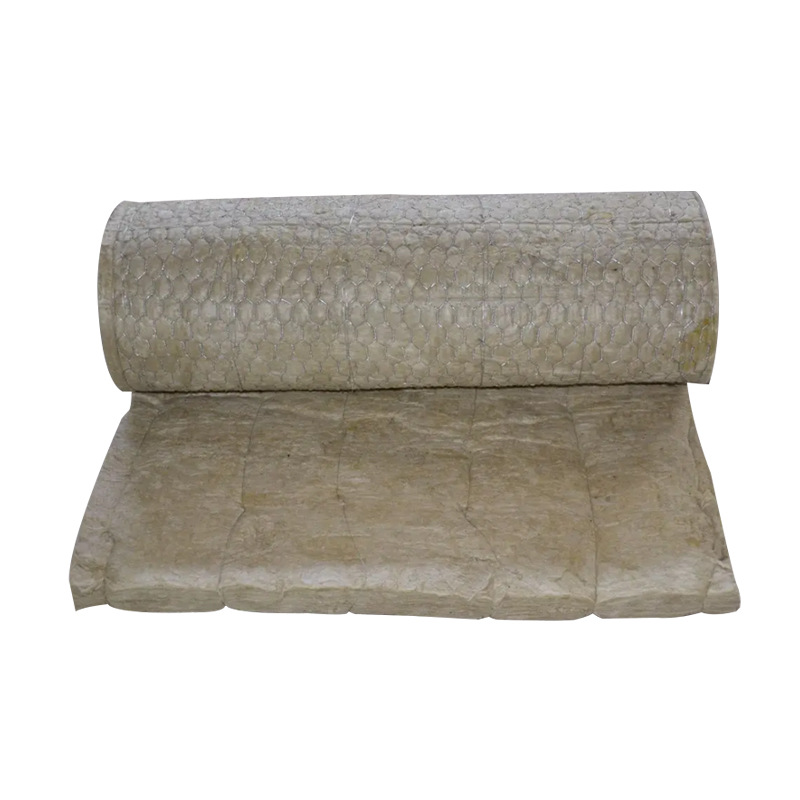
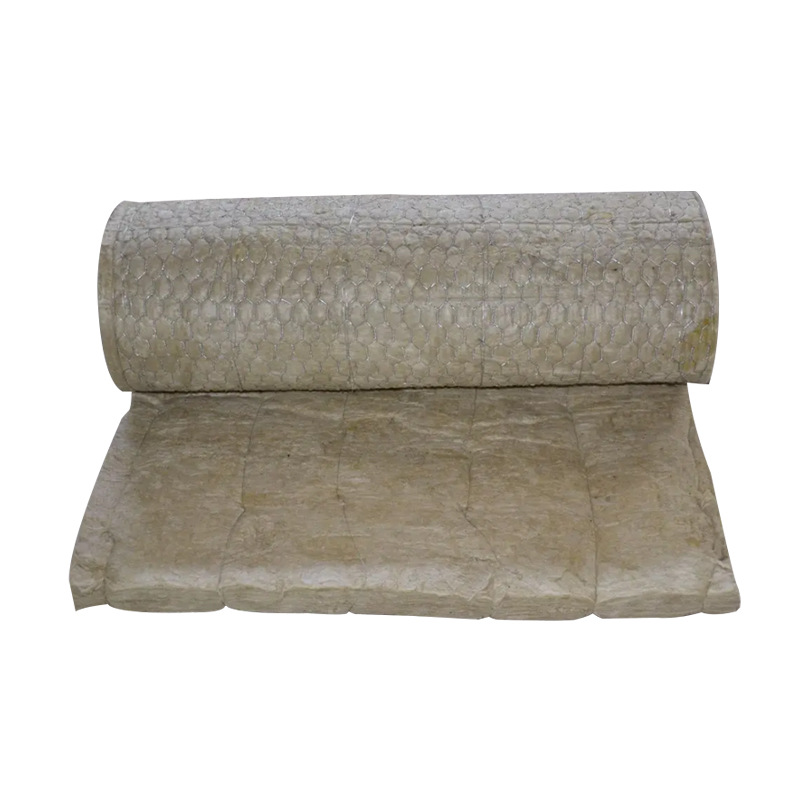
Rosewool Insulation Refractory Co.,Ltd Rock Wool Roll Felt Specification and Size
  • Commonly used: 3000x 600x 50-100 (mm);
  • Body density: 80-150kg/m3;
Overall, the density and performance of rock wool blankets exhibit a "gradient correlation":
  • The higher the density: the tighter the fibers → the more stable the structure, the higher the compressive/tensile strength, and the better the fire resistance and flame retardancy, but the thermal conductivity slightly increases (the insulation effect slightly decreases), the flexibility weakens, the construction difficulty slightly increases, and the cost is slightly higher;
  • The lower the density: the more fluffy the fibers become, resulting in lower thermal conductivity (better insulation effect), stronger flexibility, easier construction, and lower cost. However, the compressive/tensile strength is weak, deformation is easy, and the "impact resistance" of fire and flame retardancy (such as resisting high-temperature flame erosion) is slightly inferior.
Simply put, low-density emphasizes "efficient insulation+convenient construction", while high-density emphasizes "structural stability+fire-resistant load-bearing". There is no absolute "good or bad", only whether the scene is suitable or not.

Technical Parameters

Performance Indicators
Shot content ( Particle diameter ≥0.25mm) ≤ 12.0 %
The average diameter of fiber ≤7.0 μm
Density Tolerance ± 15%
Thermal Conductivity ( average temperature 70℃±52℃),W/(m/K) ≤ 0.044
Thermal load contraction temperature (more than 60kg/m3) ≤ 600 ℃
Moisture ≤0.5%
Combustion performance Not burning (Class A)
Organic content ≤ 4.0%


The rock cotton blanket of Rosewool Insulation Refractory Co.,Ltd adheres to the principle of "fiber uniformity control" in each density range - low density does not loosen, high density does not clump, ensuring stable performance at different densities; At the same time, it supports customizing exclusive density specifications based on the temperature, load-bearing capacity, and construction conditions of the customer's project, accompanied by professional selection guidance, to avoid the situation of "choosing expensive but not right".

The core difference between rock wool blankets of different densities lies in the "trade-off of performance focus": low-density wins in "insulation+convenience", high-density wins in "stability+fire prevention", and medium density is the "all rounder cost-effective". If the customer has specific project details (such as equipment temperature, building height, construction method), we will communicate with you at any time and provide you with accurate density selection plans to maximize product performance, without wasting costs and meeting core needs. For a detailed understanding of the functional effects, application plans, and sample prices of rock wool felt, you can consult our online personnel or call our hotline;


Also Read

nano insulation board

What are the differences between different models of nano insulation boards

In the field of industrial insulation, choosing the right model of nano-insulation board is equivalent to equipping production efficiency with an "invisible shield". As a powerful manufacturer specializing in insulation refractory materials, Rosewool's nano-insulation board series, with its advantage of model segmentation, has become the ideal choice for different scenarios.
View More >>
high-temperature resistant nano insulation board

What is the usable temperature range of high-temperature resistant nano insulation board?

In high-temperature operation scenarios, the temperature resistance of insulation materials is a core indicator. Rosewool's high-temperature resistant nano-insulation board, with its excellent temperature resistance, has become an ideal choice for many high-temperature industries. So, just how high a temperature can it withstand? ​
View More >>
rock wool roll felt

What are the costs and prices of rock wool roll felt manufacturers?

What are the costs and prices of rock wool roll felt manufacturers? As a manufacturer of Rosewool Insulation Refractory Co.,Ltd, we often receive inquiries from customers about the fees and prices of rock wool roll felt manufacturers. For procurement needs in industries such as industry and construction, we directly disclose a transparent pricing system, eliminating the need for intermediate distributors to increase prices. We use a manufacturer direct supply model to benefit customers and ensure that every purchase is clear and transparent. ​
View More >>

Send Enquiry Now

sales@rosewool.com
+86 13674954566
+86 13674954566
Speak To Our Team
Name:
Country :
*Email:
*Phone/Whatsapp:
*Inquiry:
X