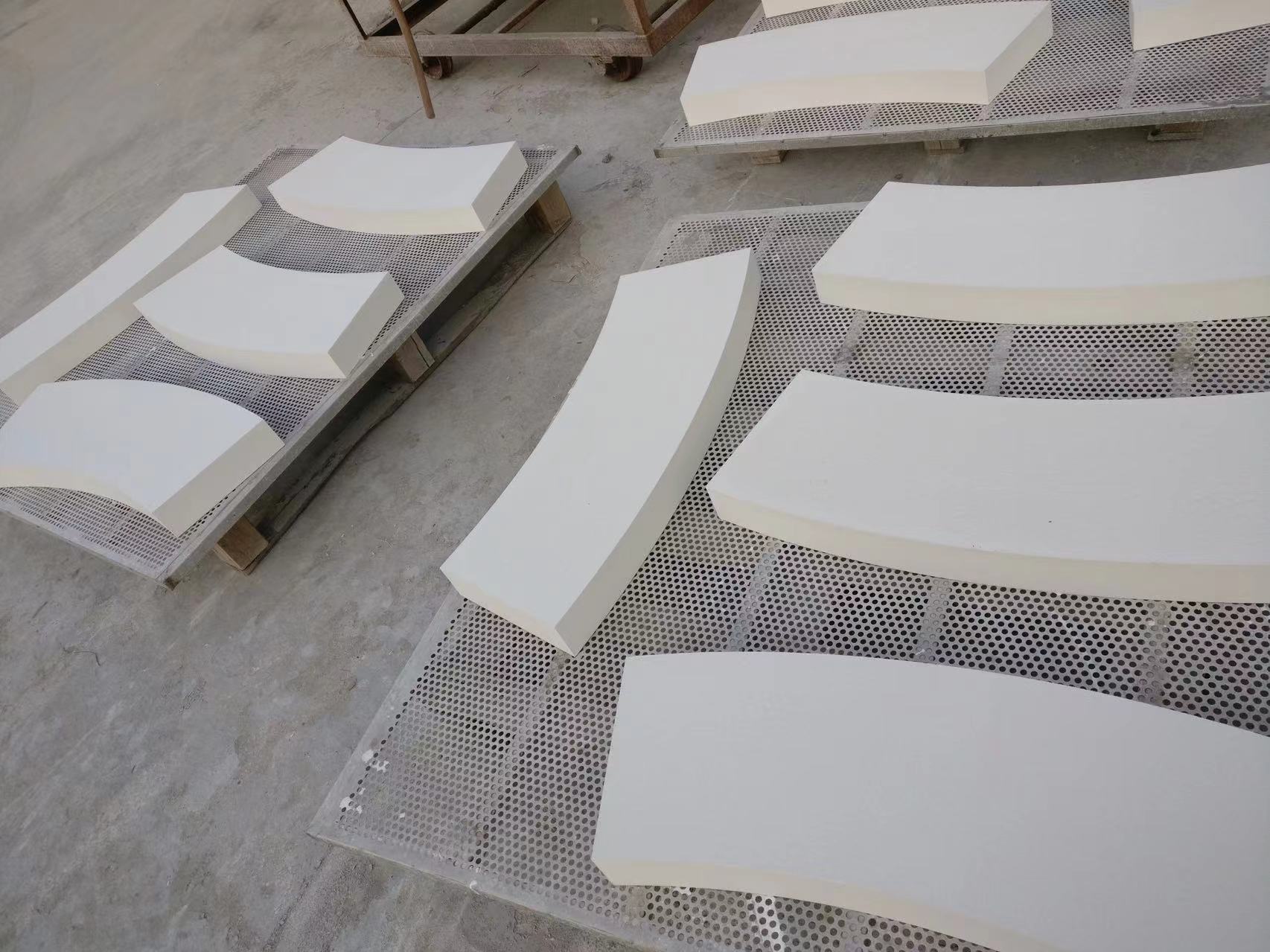
300 body density calcium silicate irregular parts? Calcium silicate shaped parts are non-standard and irregular shaped insulation products made of calcium silicate (an inorganic material generated by high-temperature and high-pressure reactions of quartz sand, lime, reinforced fibers, etc.) as the substrate, and pressed, cut or carved by professional molds. Calcium silicate shaped products with a bulk density of 300 kg/m ³ are widely used in high-temperature insulation, fire prevention, thermal insulation and other fields.
Calcium silicate shaped parts are a "customized high-performance solution" that solves the challenges of efficient, compact, and durable insulation for complex shaped equipment and structures in high-temperature and fire-resistant environments. High density calcium silicate irregular parts, carbon fiber reinforced calcium silicate boards, glass hot bending molds, etc., with a density coverage of 800-1100kg/m ³ and a temperature resistance of up to 1000 ℃.
Calcium silicate shaped parts are not conventional flat plates or pipe shells, but customized "insulation shells" or "fireproof coverings" based on the complex shapes of specific equipment and structures (such as valves, elbows, tees, spheres, equipment protrusions, special interfaces, etc.) to achieve tight fit and seamless insulation.
300 body density calcium silicate irregular parts:
1. Excellent fire and high temperature resistance performance
2. High mechanical strength and dimensional stability
3. Precise customization, efficient insulation
4. Lightweight and durable, safe and environmentally friendly
300 body density calcium silicate irregular parts? Rosewool Insulation Refractory Co.,Ltd specializes in the research and development and production of calcium silicate thermal insulation products, with complete qualifications and rich experience, and a good customer reputation. If you need to purchase, design or technical parameters (such as compressive strength, thermal conductivity curve, dimensional tolerance, etc.), we recommend providing specific operating conditions (temperature, medium, pressure, installation position, etc.) to match the most suitable specifications of calcium silicate shaped parts.