Ceramic fiber cotton insulation refractory material
Release Time: 2026-01-06
Share:
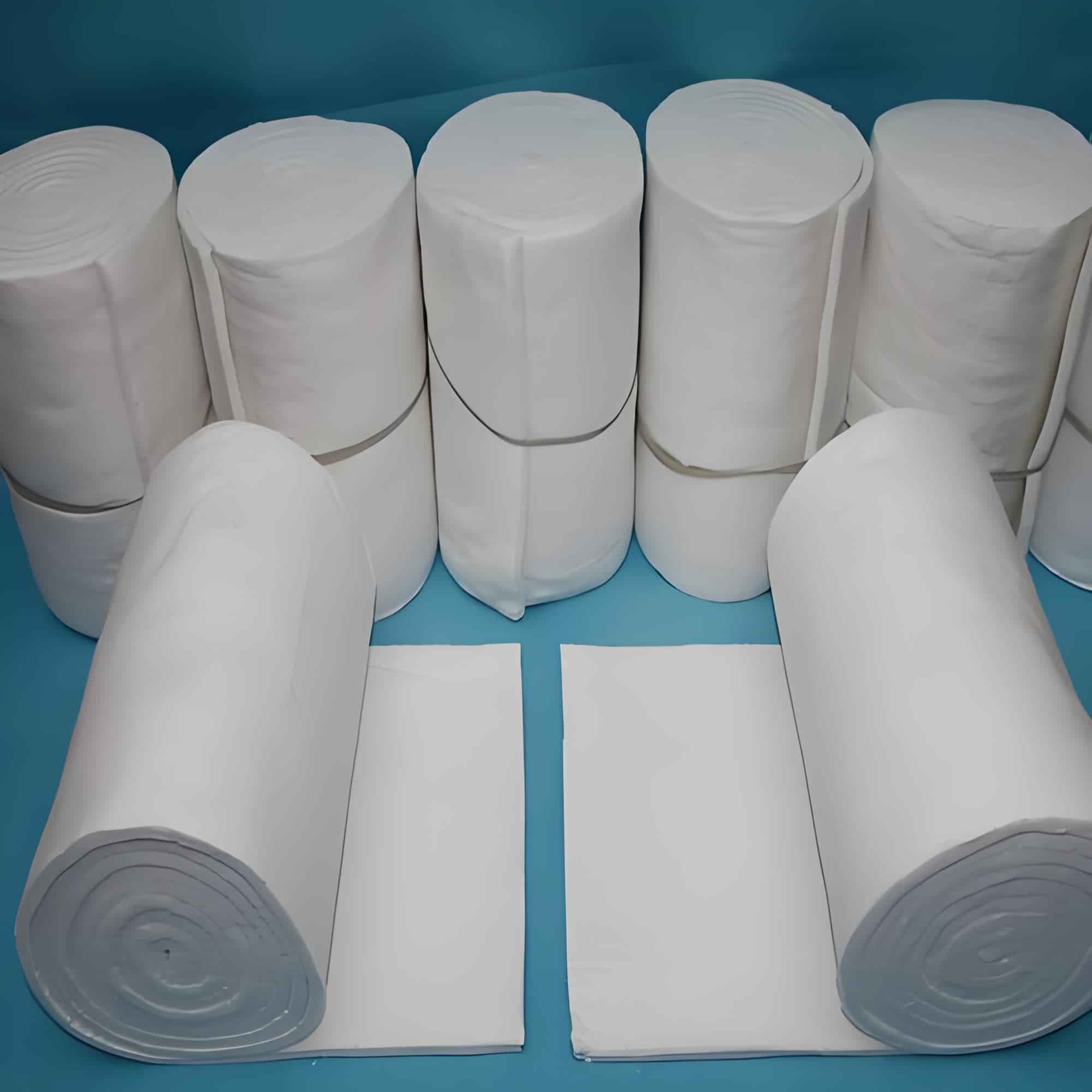
Ceramic fiber cotton insulation refractory material?Ceramic fiber cotton is a lightweight, high-temperature resistant, heat-insulating refractory material made primarily from aluminum silicate fibers through processes such as melting, fiberization, and cotton collection. It is known as the "thermal insulation expert" in industrial high-temperature scenarios. Core advantages of ceramic fiber cotton:
1. Strong high temperature resistance
The long-term operating temperature can reach 1050℃-1400℃ (varying for different types), with a higher instantaneous temperature tolerance. It is suitable for high-temperature applications in metallurgy, kilns, and chemical industries, and remains stable without melting or cracking at high temperatures, exhibiting excellent stability. 2. Lightweight insulation, energy saving and consumption reduction
With a bulk density of only about 1/10 of traditional refractory bricks and an extremely low thermal conductivity, it can significantly reduce heat loss from equipment. For industrial kilns, hot air ducts, and other equipment, it can reduce energy consumption by 15%-30%, helping enterprises save real money. 3. Resistant to thermal shock and possessing good toughness
It can quickly adapt to sudden temperature changes, without cracking or deforming due to thermal expansion and contraction; the fiber structure is flexible and strong, allowing for arbitrary cutting and bending, making it suitable for insulation construction of various irregular-shaped equipment. 4. Excellent chemical stability
Resistant to acid and alkali corrosion (excluding strongly alkaline environments), it is not prone to reacting with molten metal or flue gas, boasts a long service life, and reduces subsequent maintenance costs. 5. Environmentally friendly and harmless
It does not contain harmful substances such as asbestos, meets environmental standards, and poses no threat to human health during construction and use, aligning with the green production demands of modern industry.
With a modern production line and a professional R&D team, we can customize ceramic fiber wool with different temperature resistance and densities according to customer needs. The product quality is stable, and all indicators meet national and export standards.
2. One-stop service
We provide full-process services ranging from product selection, construction guidance to after-sales maintenance, addressing customers' pain points of "difficulty in material selection and hassle in construction".
3. Export advantages
Our products are exported to Southeast Asia, the Middle East, Europe, America, and other countries and regions, and comply with international environmental protection and refractory material certifications. We have rich experience in foreign trade cooperation.