Cement industry material insulation ceramic fiber rope specifications
Release Time: 2026-03-13
Share:
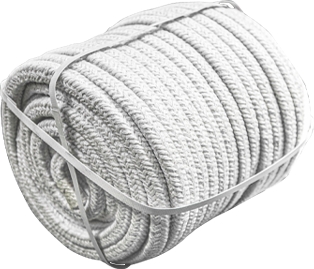
What are the specifications for insulation ceramic fiber ropes used in the cement industry? The core of ceramic fiber rope (aluminum silicate fiber rope) used in the cement industry is high temperature resistance, sealing, insulation, and dust resistance. Ceramic Fiber Rope is mainly used for door sealing, expansion joint filling, thermocouple protective sleeves, and sealing of high-temperature pipelines in high-temperature kilns such as rotary kilns, preheaters, and decomposition furnaces. Due to the extremely high temperature and dust erosion in the cement production environment, strict requirements are placed on the material's temperature resistance and wear resistance. The specifications of ceramic fiber ropes are usually defined by diameter (round rope) or edge length (square rope): 1. Round Rope Common diameter range: 3mm -50mm 2. Square Rope Common edge length range: 4mm × 4mm -50mm × 50mm 3. Twisted vs. Braided Twisted rope: With a relatively loose structure and good flexibility, it is suitable for filling irregular gaps and has a lower cost. Braided: With a tight structure, smooth surface, stronger wear resistance, and higher tensile strength. The cement industry recommends choosing braided ropes as they can better resist air flow erosion and mechanical friction.
There are three commonly used types in the cement industry, distinguished by shape and process:
Ceramic fiber twisted rope: single/multi strand twisted, soft, suitable for small gaps, pipe wrapping, and manhole sealing
Ceramic fiber circular braided rope: tightly woven, high strength, suitable for large diameter pipelines, kiln mouths, expansion joints
Ceramic fiber square rope/flat rope: square cross-section, large sealing surface, suitable for sealing flanges, maintenance doors, and kiln doors