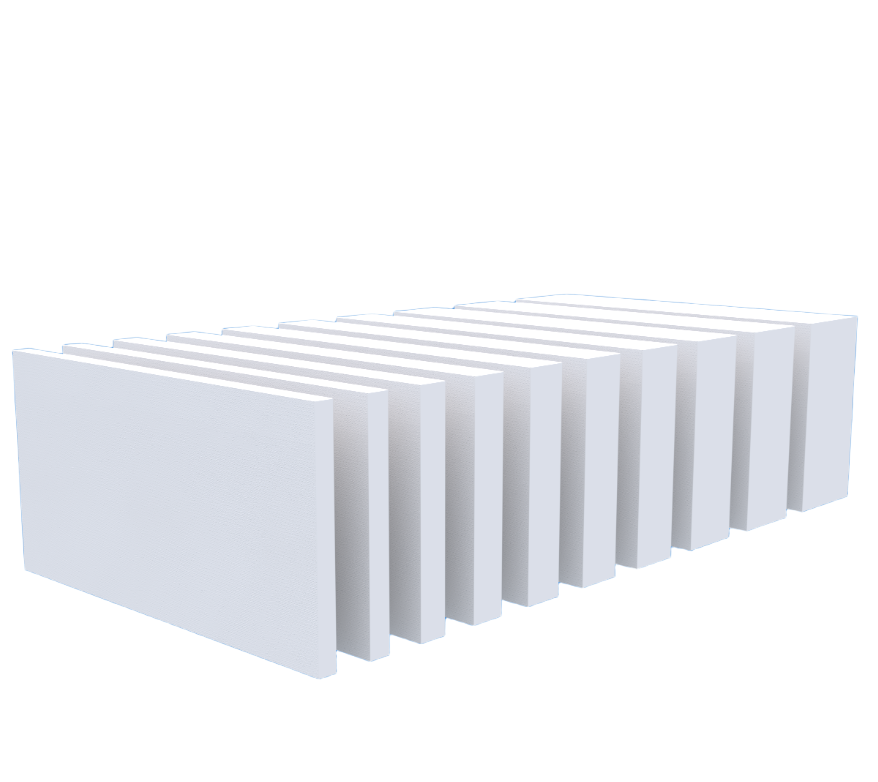
How much is the ceramic fiber blanket used in the cement plant
Release Time: 2025-11-06
Share:
How much is the ceramic fiber blanket used in the cement plant? There are many factors that affect the price of ceramic fiber blankets. In terms of brand, well-known brands usually have relatively higher prices due to factors such as quality and reputation. In terms of specifications, cement blankets of different sizes have different costs and prices. The quality directly determines the price trend, and those with good quality are more refined in terms of raw materials, production processes, etc., resulting in naturally higher prices. The market supply and demand situation can also fluctuate prices. If the market demand is high and the supply is relatively tight, prices may rise; On the contrary, prices may decrease when there is sufficient supply.
Today, with the most practical words, we will take you to understand the price details and help you choose products with high cost-effectiveness.
The price of ceramic fiber blankets specifically for cement plants is not a fixed value. Currently, the mainstream market quotation is between 15-45 yuan per square meter, and the specific price needs to be calculated based on actual demand. Many customers may wonder why there is such a big price difference for ceramic fiber blankets? In fact, the core is influenced by several key factors, let's clarify them one by one: Firstly, the product specifications and parameters. The insulation of high-temperature equipment in cement plants has strict requirements for the density and thickness of ceramic fiber blankets. Common densities include 128kg/m ³ and 160kg/m ³, with thicknesses ranging from 50mm to 150mm. The higher the density and thickness, the greater the raw material consumption and production process difficulty, and the price will naturally increase accordingly. For example, a ceramic fiber blanket with a capacity of 160kg/m ³ is more suitable for high-temperature core areas such as kilns due to its superior insulation performance, and its price will be about 20% -30% higher than that of 128kg/m ³. Next are material grade and performance indicators. The content of alumina and zirconia in ceramic fiber blankets directly determines their high temperature resistance performance. Cement plants typically require a temperature resistance of 1260 ℃ or above. Products made of high-purity materials have better slag resistance and thermal shock resistance, can adapt to complex high-temperature conditions in cement plants, have a longer service life, and are slightly more expensive than ordinary materials. Our Rosewool Insulation Refractory Co.,Ltd products are made of high-quality raw materials to ensure stable insulation effect in kilns, flues and other scenarios, reducing the cost of replacement in the later stage. Furthermore, there are procurement volume and customization requirements. As a manufacturer, we always adhere to the principle of "quantity is superior". The larger the purchase quantity, the lower the unit cost, and the factory price we offer is also more advantageous. If you need customized services such as special specification cutting and flame retardant treatment, the price will be adjusted according to the complexity of the process, and the entire process will be transparent without hidden costs. Finally, I would like to say to everyone that when choosing a ceramic fiber blanket from a cement plant, price is an important reference, but adaptability and quality are more crucial. Rosewool Insulation Refractory Co.,Ltd has been deeply cultivating insulation materials for many years, and can accurately match products according to your specific working conditions and equipment needs, providing reasonable quotations and professional technical support. If you want to know more accurate prices, please feel free to contact us at any time. We will provide sincere service and real prices to safeguard your production insulation!