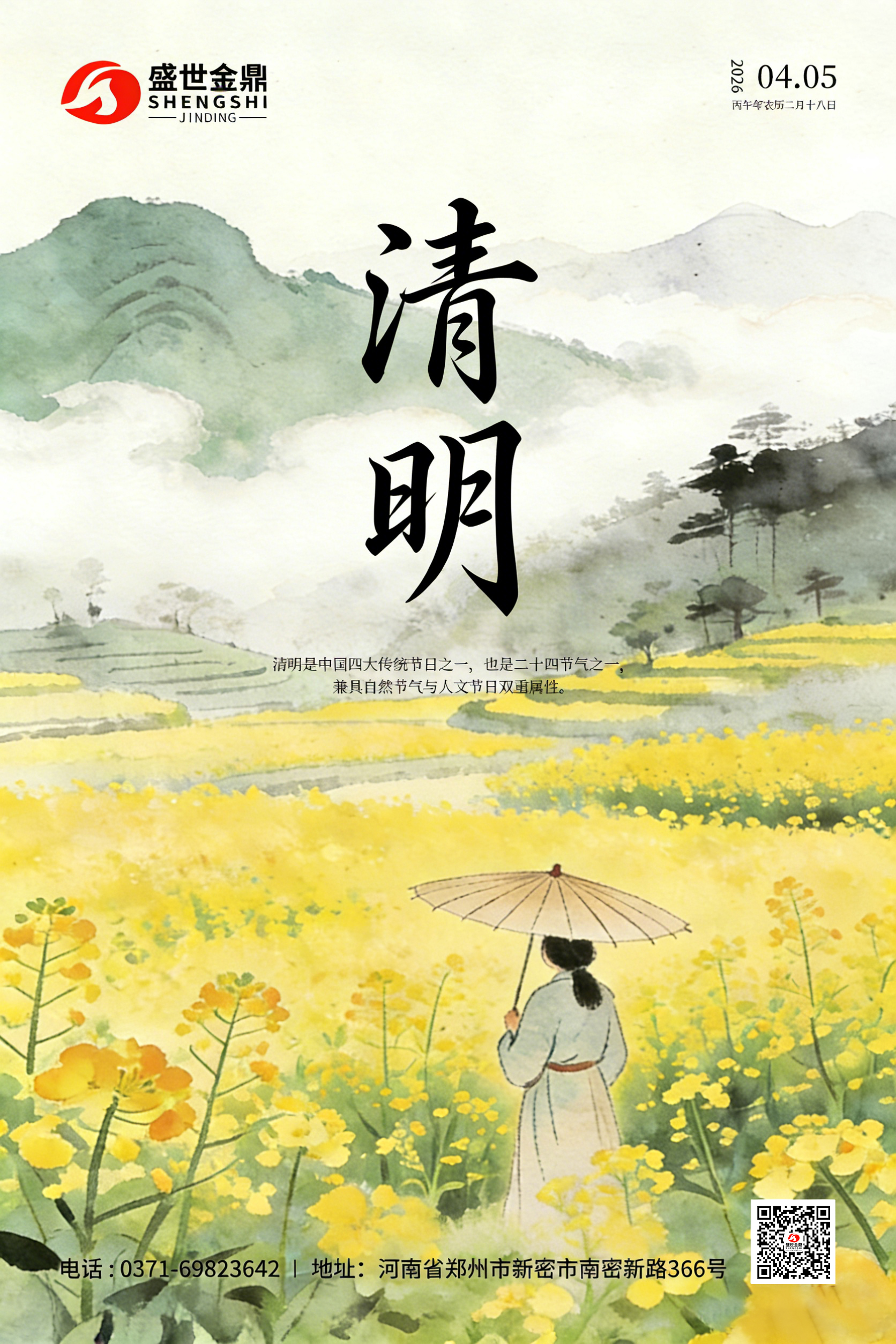
Qingming Festival is an important traditional festival in China and one of the twenty-four solar terms. It usually falls between April 4th and 6th in the Gregorian calendar and combines both natural and cultural connotations.
Its origin can be traced back to the ancient Cold Food Festival and Shangsi Festival. According to legend, during the Spring and Autumn period, Duke Wen of Jin ordered the prohibition of fire and cold food in memory of Jie Zitui. Later, it gradually merged with the custom of sweeping tombs and worshiping ancestors, forming the Qingming Festival. Since the Tang Dynasty, Qingming Festival has officially become an official holiday and has continued to this day.
The core customs of Qingming Festival are tomb sweeping and ancestor worship. People clean the cemetery, offer flowers, and express their remembrance and respect for their ancestors. At the same time, during the Qingming Festival, spring returns to the earth and all things come back to life. There are also folk activities such as hiking, flying kites, inserting willows, and swinging on swings, which not only express grief but also embrace the vitality of spring.
Nowadays, Qingming Festival has been listed as a national intangible cultural heritage. It is not only a day of mourning and inheriting filial piety, but also a season for people to get close to nature and relax, carrying the profound cultural emotions and life wisdom of the Chinese nation.