Rosewool Insulation Refractory Co.,Ltd.


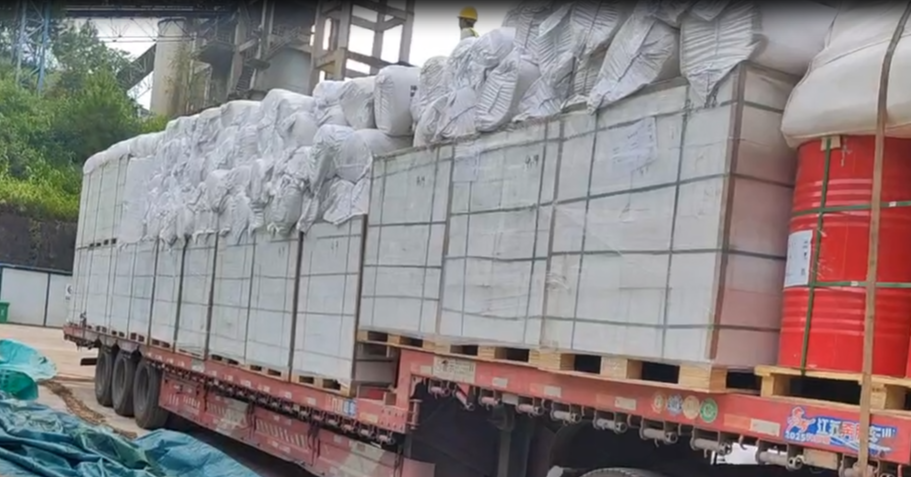
Calcium silicate board is not directly in contact with glass liquid as a hot surface, and is positioned as a heavy refractory brick backing insulation load-bearing layer; The internal hot surface temperature of the glass melting furnace can reach 1450-1580 ℃, and the interface temperature of the refractory brick backing side is mostly 450-850 ℃. Calcium silicate board is suitable for the backing working condition in this range, and float glass, daily glass, photovoltaic glass, and medicinal glass kilns are all widely used. Glass kilns are subjected to continuous high temperature conditions for a long time, and the insulation material backing the kiln directly affects energy consumption, kiln life, and production stability. " Rosewool Insulation Refractory Co.,Ltd. Calcium Silicate Board" is an ideal insulation material for glass melting furnaces, heat storage chambers, flue side walls, and other parts.
All are refractory bricks with outer backing insulation layer, without direct contact with molten glass; Divided into five major systems: the main body of the melting furnace, the heat storage chamber, the flue, the tin tank, and the material channel in front of the furnace.
1. Bottom of the melting furnace pool (the most critical application area)
2. Furnace pool wall backing
3. Large arch (kiln roof) backing
4. Regenerative chamber system
5. Flue, branch flue, main flue
6. Tin bath backing (float glass)
7. Material channel, front furnace, working pool
Glass kilns have "continuous high temperature, alternating cold and hot start and stop, upper refractory masonry load, alkali metal vapor infiltration, and long-term continuous operation (kiln age 5-8 years)"
The maximum interface temperature of glass kiln backing can reach 750-800 ℃, and it is necessary to use Xonotlite calcium silicate board with a long-term use temperature of 650-1000 ℃; It is prohibited to use ordinary tobermorite at 650 ℃ level for backing above 700 ℃, as high temperature may cause crystal dehydration, shrinkage and cracking.
1000 ℃ x 3h re firing, linear shrinkage ≤ 1.5%; The kiln is always at high temperature, and excessive shrinkage can cause gaps in the insulation layer, thermal bridge leakage, and local overheating of the shell.
The bottom of the kiln needs to bear the load of the upper refractory brick masonry: compressive strength ≥ 0.5MPa, flexural strength ≥ 0.35MPa; Under pressure, creep collapse cannot occur, otherwise the refractory layer at the bottom of the kiln will settle and crack.
The thermal conductivity at 400 ℃ is ≤ 0.075W/(m · K); low thermal conductivity achieves energy saving, and the insulation thickness can be reduced under the same insulation effect, reducing the overall load of the kiln.
Cold repair of kilns, start and stop of ovens, severe temperature fluctuations, and no cracking or warping of boards; The dimensional tolerance of the board is strict, ensuring small gaps between boards and reducing thermal bridges.
Resistant to alkali steam erosion; The sodium potassium alkali vapor evaporated from the glass kiln will penetrate into the backing, and the board cannot be quickly powdered; No asbestos, no harmful components such as sulfur and chlorine, avoiding the release of corrosive gases at high temperatures to corrode steel structures.
It can be cut and slotted on site to adapt to the irregular structure of kilns (supports, anchoring positions), making it convenient for on-site construction.
1. High temperature dimensional stability, long-term operation without powdering
The crystal structure of perovskite is stable, and within the allowable operating temperature, it will not pulverize or fall off like fiber materials during the 5-8 year kiln life cycle, avoiding dust pollution of glass liquid and reducing the risk of glass bubbles and stone defects.
2. Excellent heat shock resistance, suitable for oven drying, cold repair start stop
Heating up the oven and cooling down the furnace, alternating between hot and cold temperatures, making the board less prone to cracking, improving the overall integrity of the insulation layer, and reducing gaps and thermal bridges.
3. The alkali vapor penetration resistance is better than that of lightweight insulation bricks
Compared to lightweight high alumina bricks, calcium silicate board has a moderate density, lower alkali vapor penetration rate, delays the corrosion and aging of the backing layer, and extends the overall life of the kiln.
4. Reduce the surface temperature of the shell, significantly saving energy
Reasonable thickness of calcium silicate board backing, the temperature of the kiln shell can be controlled within the range of 60-85 ℃. Compared with traditional lightweight brick insulation, the comprehensive heat dissipation loss is reduced by 20-30%, directly reducing natural gas/heavy oil consumption.
5. Convenient construction and good sealing performance
The board is neat and can be cut, and the board seams can be sealed with high-temperature adhesive; Hard plates are not easily deformed, and the steel structure shell is uniformly stressed.
6. Hard load-bearing insulation, distinguished from ceramic fiber blankets
Ceramic fiber blanket is a flexible material that is prone to creep, compression, and sinking under pressure at the bottom of the kiln; Calcium silicate board is a hard board that can withstand the weight of refractory masonry and is the only mainstream load-bearing backing material for glass kiln bottoms. It does not collapse or sink under long-term loads.
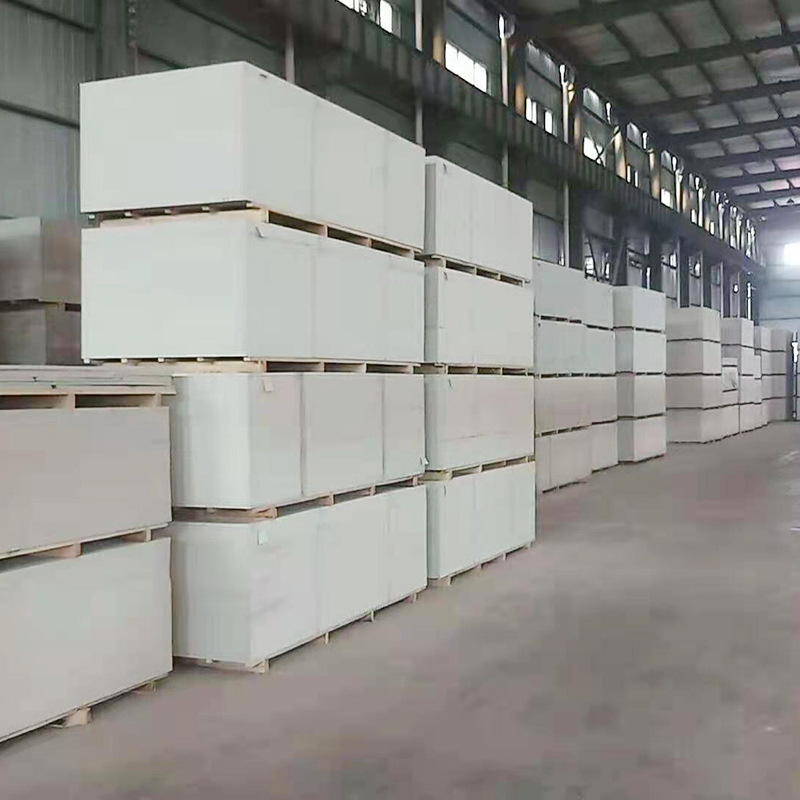
Application of calcium silicate board insulation in glass melting furnaces, energy-saving and refractory material solutions for high-temperature kilns? Rosewool Insulation Refractory Co.,Ltd. calcium silicate board is made of high-purity quartz sand, lime, and reinforced fibers, which are steam cured at high temperature and high pressure. It has a "asbestos free formula, Class A non combustible" and can be used for a long time at a temperature of up to 1050 ℃. It has a small coefficient of thermal expansion and excellent thermal shock resistance. It is not easy to crack or powder under the alternation of cold and hot in the kiln, ensuring the stability of the temperature field inside the kiln and helping to stabilize the quality of glass products. The low thermal conductivity of the board can effectively block high-temperature overflow, reduce the temperature of the outer wall of the kiln, decrease heat loss, and significantly reduce fuel consumption in glass factories.
As a manufacturer of refractory materials from the source, Rosewool Insulation Refractory Co.,Ltd. has a large-scale production line and products that comply with national and ISO standards. It has a large number of glass kiln landing cases and a professional technical team to provide one-stop services for working condition selection, construction guidance, and after-sales service. The supply is stable and the cost-effectiveness is outstanding, providing reliable guarantee for the long-term safety insulation of glass kilns.