Rosewool Insulation Refractory Co.,Ltd.

Your Position: Home > About us > News > Industry Knowledge

The four core standards teach you how to choose the source factory of 1300 ceramic fiber paper containing zirconium and high temperature resistance?

Release Time: 2026-01-16
Share:
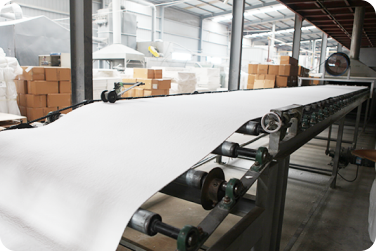
Zirconium containing high-temperature resistant 1300 ceramic fiber paper and zirconium containing ceramic fiber gasket? Zirconium containing high-temperature resistant 1300 ℃ ceramic fiber paper "and" Zirconium containing ceramic fiber gasket "belong to high-performance high-temperature insulation and sealing materials, widely used in ultra-high temperature working environments such as metallurgy, petrochemicals, power, aerospace, glass kilns, etc. It is crucial to choose a source factory with technical strength and stable production capacity when making bulk purchases or selecting projects.
                                                                                       

Zirconium containing high-temperature resistant ceramic fiber paper is mainly composed of:

Aluminum oxide (Al2O3): ≥ 45%
SiO ₂ (silicon dioxide): ≈ 40%
ZrO ₂ (Zirconia): 15% -17% ← Key to improving temperature resistance
Mechanism of action of zirconium containing high-temperature resistant ceramic fiber paper:
ZrO ₂ forms a stable cubic crystal structure at high temperatures, inhibiting fiber grain growth;
Significantly reduce the linear shrinkage rate at high temperatures (1350 ℃ × 24h ≤ 2-3%, ordinary fibers can reach 5-8%);
Enhance the ability to resist creep and slag corrosion.

Technical Parameters

Classification Temperature 1260℃
(2300℉)
1430℃
(2600℉)
Bulk density (kg/m3) 200-250
(13-16 lb/ft3)
Organic content(%) 6-8
Thermal conductivity(w/m.k)   0.075-0.085 (200℃ /392℉)
  0.115-0.121 (400℃/752℉)
   0.165-0.175 (600℃/1112℉)
Moisture Content(%) ≤1 ≤2
Chemical composition
(%)
Al2O3 45-46 38-47
SiO2 51-52 51-52
ZrO2   15-17
Size(mm) 100000*610/1220*0.5(24′/48′ width)
60000*610/1220*1(24′/48′ width)
30000*610/1220*2(24′/48′ width)
20000*610/1220*3(24′/48′ width)
15000*610/1220*4(24′/48′ width)
12000*610/1220*5(24′/48′ width)
10000*610/1220*6(24′/48′ width)
Packing By Carton with plastic bag


How to choose a ceramic fiber paper source factory based on the four core principles?

1. Do you have the production capacity for zirconium containing fibers?

The true source factory should have a resistance melting furnace or electric arc furnace, and be able to produce zirconium containing ceramic fiber cotton on its own (not reprocessed from purchased cotton).
Small factories are mostly engaged in "processing with supplied materials", resulting in significant fluctuations in quality.

2. Is there an authoritative testing report?

Must provide:
GB/T 3003-2017 Testing of Refractory Ceramic Fiber Products;
Chemical composition analysis (Al ₂ O ∝ ≥ 45%, ZrO ₂ ≥ 15%);
Linear shrinkage rate test (1350 ℃ × 24h ≤ 3% is preferred);
Environmentally friendly asbestos free declaration (compliant with RoHS/REACH).

3. Process control capability

Paper products: require vacuum filtration molding, with uniform fiber distribution and no layering;
Gasket products: require molding or CNC punching, with a dimensional tolerance of ≤± 0.5mm;
Supporting customized shapes (such as perforated, curved, multi-layer composite) is a bonus.

4. Engineering application cases

The four core standards teach you how to choose the source factory of 1300 ceramic fiber paper containing zirconium and high temperature resistance? Rosewool Insulation Refractory Co.,Ltd. is a trusted brand partner that requires objective evaluation based on its actual product capabilities, industry positioning, and technical strength; For a detailed understanding of the specific functional application solutions of ceramic fiber products, click on our online business platform or call our consultation hotline, and our professional staff will provide you with detailed answers;



Also Read

ceramic fiber modules

Can ceramic fiber modules replace traditional refractory materials?

In the field of industrial furnace insulation materials, whether traditional refractory materials can be replaced is a core issue of concern for many enterprises. For a long time, traditional materials such as refractory bricks and castables have dominated the market with mature application scenarios. However, with the increasing demand for energy conservation, efficiency, and cost control in industrial production, their limitations have become increasingly apparent. As a benchmark enterprise in the insulation and refractory materials industry, Rosetexwool has proven through technological research and market practice that ceramic fiber modules can not only replace traditional refractory materials, but also achieve comprehensive upgrades in performance, cost, construction, and other aspects, bringing higher value to enterprises. ​
View More >>
Rock wool board for fire barrier in buildings

The Influence of Moisture on the Thermal Insulation Performance of Rock Wool Boards

In the realm of thermal insulation materials, rock wool boards are widely lauded for their excellent heat - blocking capabilities, fire resistance, and durability. However, one factor that can significantly compromise their performance is moisture. Understanding how moisture impacts the thermal insulation of rock wool boards is crucial for architects, builders, and facility managers aiming to maintain energy - efficient and long - lasting insulation systems.
View More >>
calcium silicate board

What are the core advantages of high-temperature resistant calcium silicate board products?

High temperature resistant calcium silicate board is an inorganic insulation material mainly composed of silicon and calcium materials, made through high-temperature and high-pressure processes. It has the characteristics of high temperature resistance, non flammability, and high compressive strength, and is widely used in industrial equipment, construction and other fields. Using quartz sand, diatomaceous earth (siliceous material), cement, and lime (calcareous material) as raw materials, reinforcing fibers (such as cellulose fibers or mineral fibers) are added, and after pulping and molding, they are cured in high temperature and high pressure steam to form calcium silicate cementitious material.
View More >>

Send Enquiry Now

sales@rosewool.com
+86 13674954566
+86 13674954566
Speak To Our Team
Name:
Country :
*Email:
*Phone/Whatsapp:
*Inquiry:
X