Industrial insulation fire-resistant glass wool felt manufacturer direct selling price
Release Time: 2025-12-16
Share:
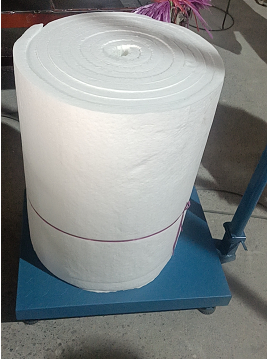
What is the direct selling price of industrial insulation fire-resistant glass wool felt from manufacturers? Ultra fine glass wool is an insulation material mainly made of quartz sand, feldspar, and other raw materials. Ultra fine glass wool has the characteristics of light weight, low thermal conductivity, and corrosion resistance. It can be widely used in thermal equipment, air conditioning constant temperature, cold and hot pipelines, oven drying rooms, refrigeration preservation, and building insulation, heat insulation, and sound insulation. Glass wool roll felt, due to its own characteristics and material composition, has good insulation and thermal insulation effects. At the same time, it also has excellent shock absorption and sound absorption properties. This material has a wide range of applications and can effectively alleviate noise pollution. Whether it is industrial or home decoration, it can effectively improve our daily working environment. In addition, the glass wool roll felt can be cut arbitrarily according to actual needs, making it easy to use.
The direct selling price of insulation and fire-resistant glass wool felt from manufacturers is influenced by factors such as raw materials, thickness, density, product specifications, whether it comes with aluminum foil, brand, production process, etc., resulting in significant price differences. 1. Raw material cost: Its core raw materials are quartz sand, limestone, glass, etc. The market price fluctuations of these raw materials will directly affect production costs. For example, when the price of quartz sand increases due to tightened mining policies or increased transportation costs, the ex factory price of glass wool felt will also rise accordingly. In addition, changes in adhesive, energy, and labor costs used in production can indirectly transmit to product prices. 2. Product specification parameters: This is a key factor affecting the price. On the one hand, thickness, density, and price are positively correlated. Generally, the thicker and denser the thickness, the more materials are used per unit area, and the stronger the insulation and fire resistance performance, resulting in higher prices. For example, glass wool felt with a density of 24KG/㎡ is much more expensive than products with a density of 12KG/㎡; On the other hand, additional veneers will also increase costs, such as glass wool felt with composite aluminum foil. Due to the added moisture-proof and reflective insulation functions of the aluminum foil layer, the price per square meter will be about 2-4 yuan higher than ordinary models. 3. Production process level: Different processes determine the differences in product quality and price. The glass wool felt produced using advanced centrifugal technology and precise temperature control process has more uniform fibers, more stable insulation and fire resistance performance, and low energy consumption and loss during the production process. However, the initial equipment investment is large, and the product pricing may be slightly higher; The simple process of small manufacturers may have problems such as uneven fiber thickness and unstable performance, which may result in lower prices in order to seize the market. If special glass wool felt with ultra-high temperature resistance needs to be produced, additional processing is required and the price will be significantly increased. 4. Brand and Quality Reputation: Famous brands such as Huamei strictly control quality in production, and their products usually pass multiple system certifications. Some also participate in the drafting of industry standards, and can provide comprehensive after-sales service with guaranteed quality and after-sales service. Prices are higher than ordinary small brands. However, products from small manufacturers may lack brand premium and the quality testing process may be simplified, resulting in lower prices to enhance competitiveness. 5. Market supply and demand relationship: Fluctuations in industry demand can affect manufacturers' pricing. During the peak season of construction, there is a surge in demand for glass wool felt in real estate, industrial pipeline insulation, and other projects. If the supply is insufficient, manufacturers may raise prices; On the contrary, during the off-season of winter construction, market demand decreases, and manufacturers may lower prices and promote sales in order to reduce inventory. In addition, the production capacity of the entire insulation material industry is also affected. When a large number of new factories are put into operation and supply exceeds demand, the overall market price will show a downward trend.
What is the direct selling price of industrial insulation fire-resistant glass wool felt from manufacturers? Rosewool Insulation Refractory Co.,Ltd has been engaged in the research, development, production, and sales of glass wool felt for over 40 years. We have solutions for different types of glass wool felt to be delivered to different industries. For more detailed information on the functions and prices of glass wool felt, please click on our online consultation or call our consultation hotline. Our professional technical personnel will provide you with detailed answers; Rosewool Insulation Refractory Co.,Ltd. Consultation Hotline: 13674954566