Rosewool Insulation Refractory Co.,Ltd.


The steam turbine cylinder body of a thermal power plant is subjected to long-term equipment vibration and alternating cold and hot cycles, and the traditional ordinary perlite coating is prone to mesh cracking, peeling, and block like detachment. The failure of the coating layer not only increases the heat dissipation loss of the unit, raises dust in the factory environment, and causes debris to fall around the oil system, but also poses a fire safety hazard, affecting the safe and economic operation of the unit;
1. Vibration and thermal expansion and contraction: The temperature difference between the start and stop of the steam turbine is large, and the cylinder body continues to vibrate. The ordinary plaster has insufficient anti vibration and anti thermal shock performance, and cracks and peels under repeated stress.
2. Defects in grassroots structure: The outer wire mesh is not tensioned, the overlap is insufficient, the buried position of the mesh is unreasonable, and there is a lack of skeleton reinforcement.
3. Improper material selection: Ordinary building plastering mortar is used, lacking high-temperature resistant fiber modified components, resulting in brittle powdering under high temperature conditions.
4. Construction process issues: The one-time plastering is too thick, without layered construction, without setting expansion dividing joints, rapid water loss during hot construction, and accelerated cracking.
5. Media erosion: Condensation water, steam leakage, and bearing box oil leakage erode the coating layer, causing local powdering and peeling.
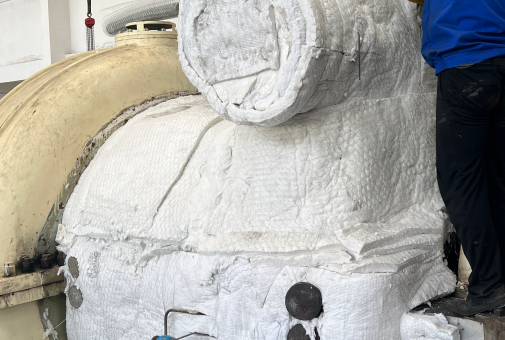
Only applicable to small defects, it is recommended to stop the machine for large areas of detachment, and it is prohibited to carry out hot and large area thick plastering construction.
1. Thoroughly knock out the cracked, hollow, and peeling parts, chisel a slope transition around them, clean up loose powder, expose the complete wire mesh base, and deal with the sources of oil and water leakage.
2. Blow clean the floating dust and oil stains, and keep the base dry.
3. Use Rosewool Insulation Refractory Co., Ltd. turbine specific rare earth composite silicate coating material, layer by layer thin coating, single layer 5-8mm, wait for the first layer to dry before proceeding to the next layer, with a total thickness control of 8-12mm; add alkali resistant fiberglass mesh for local reinforcement in defect areas.
4. Natural air drying and curing, after complete curing, apply a high-temperature waterproof sealing coating to isolate water vapor from entering.
1. Demolition and cleaning: completely remove the ineffective old plaster layer; Check the internal insulation layer, replace the calcium silicate board and ceramic fiber felt if they are loose, displaced, or damp. Check the outer stainless steel mesh to ensure that the mesh is tensioned and overlapped by ≥ 50mm, and the mesh body is placed in the middle of the plastering layer; Reserve expansion gaps for cylinder flanges, corners, and supports to release thermal deformation stress.
2. Optimal matching of insulation layer (internal insulation material combination of Rosewool Insulation Refractory Co., Ltd.)
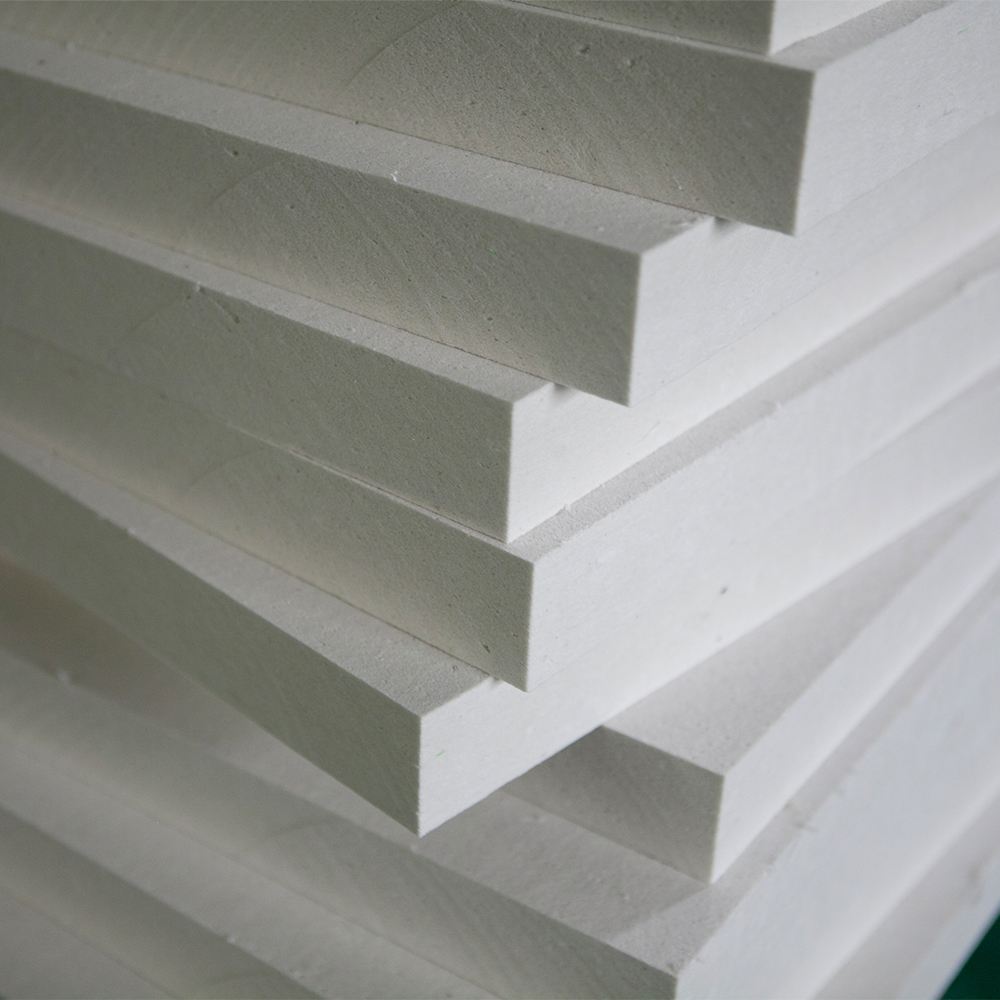
-Steam turbine cylinder body: hard calcium silicate board, temperature resistance of 650-1000 ℃, high compressive strength, anti vibration, is a classic insulation substrate for steam turbine cylinder body; Units with severe working conditions can be compounded with nano aerogel felt to reduce insulation thickness and heat loss.
-Valve casing and steam conduit: ceramic fiber blanket/board, designed to cope with local high temperatures.
3. Construction of plastering layer: Cold construction, using Rosewool Insulation Refractory Co., Ltd. turbine specific plastering material, strictly proportioning, layer by layer thin plastering, with a total thickness of 8-12mm; strengthening mesh is added to large vibration parts such as flanges and cylinder body corners; Set up 5-8mm expansion grid joints and fill them with high-temperature flexible sealing material; Natural maintenance ensures sufficient dryness, and a high-temperature waterproof sealing layer is applied upon completion.
To address the pain points of frequent cylinder opening maintenance for the split surface of the steam turbine, traditional plastering requires crushing during each maintenance, materials cannot be reused, and the maintenance period is long, a “ detachable insulation module+stainless steel outer cover ” technical renovation plan can be adopted.
Construct layers from the inside out: cylinder shell → PLUS blanket multi-layer staggered insulation layer → galvanized wire mesh → layered plastering (locally reinforced with fiberglass mesh) → waterproof sealing coating, eliminating problems such as cracking, peeling, and detachment of the plastering layer from the root, and reducing long-term operation and maintenance costs.
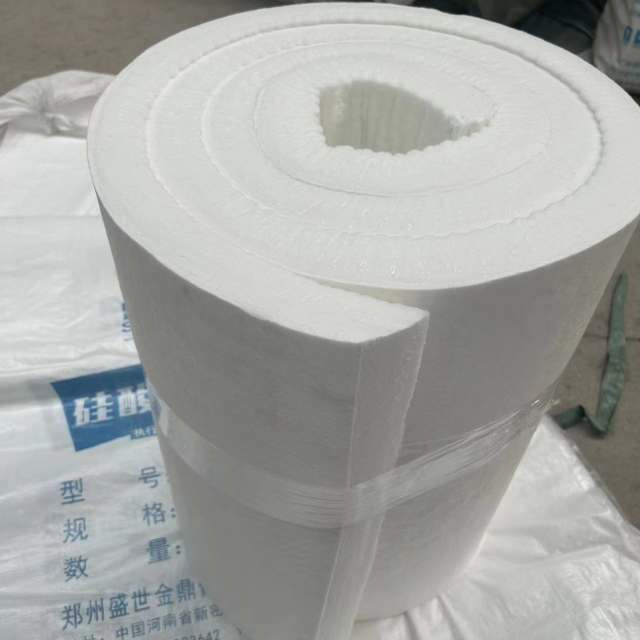
PIUS blanket is a new type of insulation blanket specifically designed for steam turbines launched by Rosewool Insulation Refractory Co., Ltd. to power plant customers. It is made from selected hot materials such as coke gemstones, melted at high temperatures, blown into fibers, solidified into shapes, and cut and rolled. It has the characteristics of high temperature resistance, good stability, high chemical stability, low thermal conductivity, low heat capacity, and easy cutting and construction. Compared with natural aluminum silicate needle punched blanket, it has lower slag ball content, higher tensile strength, better rebound rate, no burrs in cutting, convenient construction, better insulation effect, and longer service life.
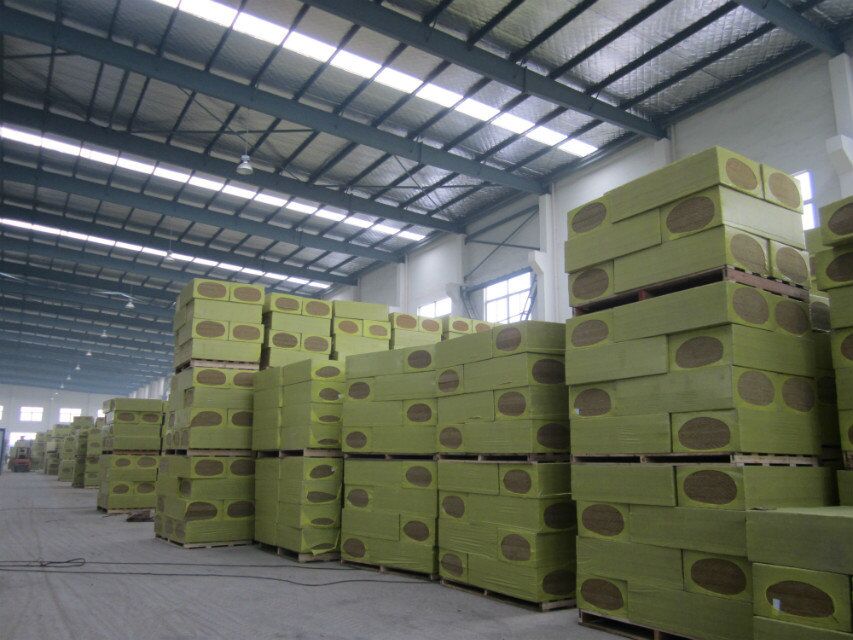
Rosewool Insulation Refractory Co., Ltd. deep ploughing power industry thermal insulation and fire resistance supporting materials can provide a complete set of supporting materials, such as rare earth composite silicate coating fabric, hard calcium silicate board, ceramic fiber products, nano aerogel felt, for steam turbines of power plants, which are suitable for the full working conditions of steam turbine cylinders, valve shells, steam conduits of thermal power plants, taking into account the needs of different projects such as emergency repair, overhaul, and technical transformation, support on-site technical disclosure, provide suggestions on working condition selection, help power plants solve the problem of steam turbine thermal insulation and plastering failure, and ensure safe, stable, and energy-saving operation of units.
Rosewool Insulation Refractory Co., Ltd. PIUS blanket has lower slag ball content and higher tensile strength; The slag ball content of PLUS blanket is less than 5%, and the tensile strength is greater than 110Mpa; Stable chemical properties and powder free use; Good thermal shock resistance and long service life; Moreover, the same density products have higher tensile strength;