How much does 10*30 ceramic fiber paper for power plant boilers cost, and what is the cost of ceramic fiber paper gaskets for power plant boilers?
Release Time: 2026-01-04
Share:
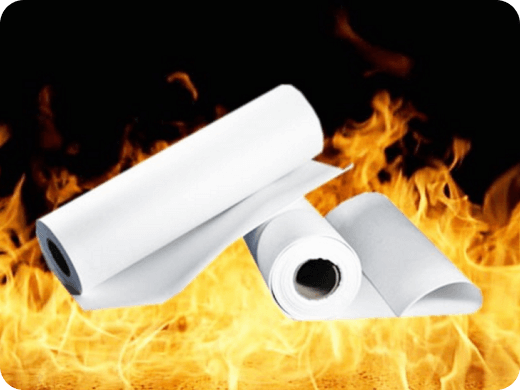
How much does 10*30 ceramic fiber paper for power plant boilers cost, and what is the cost of ceramic fiber paper gaskets for power plant boilers? The "10×30 ceramic fiber paper" for power plant boilers typically refers to a roll of ceramic fiber paper with a thickness of 10 mm and a width of 30 cm (or 300 mm), specifically designed for high-temperature industrial equipment such as power plant boilers. This type of material plays a crucial role in heat insulation, sealing, energy conservation, and safety protection in power plant boiler systems. Functional effects of ceramic fiber paper in power plant boilers: 1. Highly efficient heat insulation and retention, reducing heat loss
Low thermal conductivity: The typical value is 0.065–0.085 W/(m·K) at 400℃, which is much lower than that of traditional refractory bricks or diatomaceous earth.
Reduce heat dissipation from boiler walls: Effectively retain heat within the combustion chamber or flue to enhance thermal efficiency.
Significant energy-saving effect: According to industry data, the rational use of ceramic fiber paper can increase the thermal efficiency of boilers by 3%–8%, resulting in considerable annual fuel cost savings.
2. High-temperature sealing to prevent air and gas leakage
Sealing gaskets applied to boiler manhole doors, observation holes, expansion joints, pipeline flanges, and other parts.
It can withstand temperatures ranging from 1000 to 1260℃ (depending on the model, such as the 1260 model), and maintains flexibility and resilience even at high temperatures.
Prevent the infiltration of cold air or leakage of high-temperature flue gas to ensure combustion stability and operational safety.
3. Good thermal shock resistance, suitable for frequent start-up and shutdown
Power plant boilers often need to be started and stopped frequently due to peak shaving requirements, and sudden temperature changes can easily lead to cracking of traditional materials.
Ceramic fiber paper exhibits excellent thermal stability and thermal shock resistance, capable of withstanding repeated heating and cooling without pulverization or cracking.
4. Excellent electrical insulation performance
In areas such as electric heating elements, ignition devices, and temperature measurement probes that are integrated with boilers, it can serve as a high-temperature electrical insulation barrier.
With high volume resistivity, it is suitable for safety protection in high-voltage environments.
5. Lightweight and flexible, easy to install and maintain
With a density of only 160–220 kg/m³, its weight is less than 1/10 of that of refractory bricks.
It can be tailored, stamped, and wrapped to fit complex structures (such as bent pipes and irregular seams).
The installation is quick, which shortens the maintenance period and reduces labor costs.
6. Strong chemical stability and corrosion resistance
It exhibits good resistance to water vapor, weak acids and alkalis, and SO₂/NOx in flue gas (asbestos-free, environmentally friendly, and non-toxic).
It is resistant to aging and has a long service life (up to 3-5 years under normal operating conditions).
How much does 10*30 ceramic fiber paper for power plant boilers cost? What is the cost of ceramic fiber paper gaskets for power plant boilers? Rosewool Insulation Refractory Co.,Ltd specializes in high-temperature insulation materials, with a product line that matches the needs of power plants. Moreover, we are a manufacturer, not a trader, offering transparent pricing, cost advantages, and stable supply capabilities, backed by actual industrial customers. For a detailed understanding of more product introductions and functional parameters, click on our online business platform to consult our professionals for detailed assistance;