How to choose insulation wire mesh for power plants? Galvanized or stainless steel?
Release Time: 2026-11-03
Share:
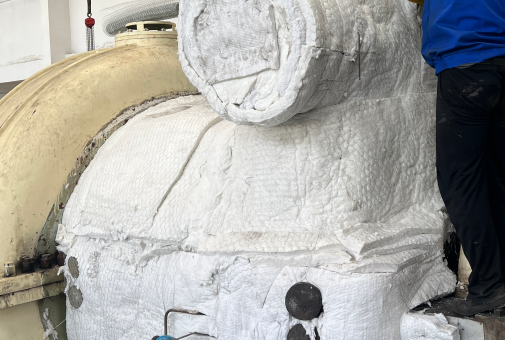
In the insulation engineering of power plants, flexible insulation materials such as ceramic fiber blankets and PLUS blankets need to be tied and fixed with wire mesh after laying to enhance the integrity, wind erosion resistance, and vibration resistance of the insulation layer. However, many construction and procurement personnel are faced with a choice: should the wire mesh be galvanized or stainless steel? Today, Rosewool Insulation Refractory Co.,Ltd. will provide you with a detailed analysis from a professional perspective. Galvanized wire mesh vs stainless steel wire mesh: core differences
1. Galvanized wire mesh
Galvanized wire mesh is a layer of zinc coated on the surface of low-carbon steel wire, utilizing the sacrificial anodic protection effect of zinc to prevent rust. The advantages are low cost, good flexibility, easy construction, and good performance in normal or medium low temperature, dry environments. But its corrosion resistance is limited. If it is exposed to high temperature, high humidity or corrosive atmosphere for a long time, the zinc layer will gradually consume, the steel wire will start to rust, and the insulation layer will loosen.
2. Stainless steel wire mesh
Stainless steel wire mesh (commonly made of 304 or 316 material) relies on its own passivation film for corrosion resistance, with excellent high temperature and corrosion resistance performance. Especially in areas such as boilers, flues, and SCR denitrification in power plants, the flue gas contains sulfur oxides, nitrogen oxides, and water vapor. Stainless steel wire mesh can maintain structural stability for a long time, without rusting or breaking, ensuring that the insulation layer is firm and reliable.
How to choose different parts of the power plant?
The operating conditions of power plants vary greatly, and material selection cannot be a one size fits all approach:
High temperature areas such as turbine cylinder body and main steam pipeline (540-620 ℃): It is recommended to use stainless steel wire mesh (304/316). These types of parts have high temperatures, large vibrations, and may come into contact with water vapor. The galvanized layer will quickly oxidize and fail at high temperatures, and stainless steel can ensure long-term reliable bundling.
Boiler wall, flue, SCR reactor: The flue gas is highly corrosive, and stainless steel wire mesh is preferred. Especially in the SCR area, the acidic environment formed by ammonia and sulfur oxides severely corrodes the galvanized layer, resulting in a longer lifespan of the stainless steel mesh.
Low temperature areas such as electrostatic precipitators, desulfurization systems, and auxiliary pipelines: If the environment is relatively dry and there is no strong corrosion, galvanized wire mesh is an economical and practical choice with lower cost and convenient construction.
Outdoor or high humidity environment: Regardless of temperature, it is recommended to use stainless steel wire mesh or perform additional anti-corrosion treatment on galvanized wire mesh to prevent early corrosion.
In the insulation construction of power plants, whether to use wire mesh outside the insulation layer and whether to choose galvanized or stainless steel binding materials should not only depend on the unit price, but also on the equipment temperature, environmental corrosiveness, maintenance cycle, and outer protective structure. According to the Construction Code for Industrial Equipment and Pipeline Insulation Engineering GB 50126-2008, when using galvanized iron wire, stainless steel wire, metal tape or adhesive tape to tie the insulation layer, the appropriate specifications should be selected based on the insulation layer material, equipment and pipe diameter. Under conventional insulation conditions, galvanized iron wire is widely used; For cold insulation, strong corrosion or high humidity environments, stainless steel wire or stainless steel strip is more suitable.
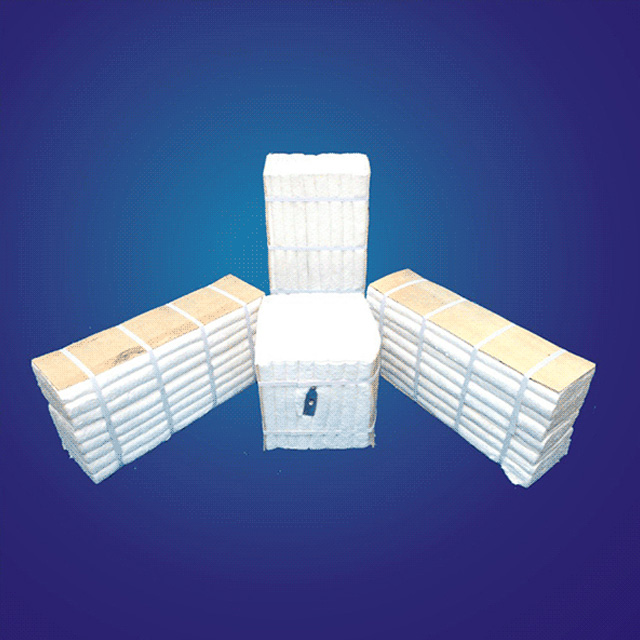
The ceramic fiber blanket and PLUS blanket of Rosewool Insulation Refractory Co.,Ltd. are flexible high-temperature insulation materials developed for power plants, industrial kilns, high-temperature pipelines and other working conditions. Compared to ordinary ceramic fiber blankets, PLUS blankets exhibit more stable performance in terms of fiber uniformity, slag ball control, tensile strength, and rebound performance. The blanket surface is flat, and cutting construction is less prone to loose edges, which can better fit irregular parts such as pipes, valves, and elbows.
By choosing Rosewool Insulation Refractory Co.,Ltd. for cooperation, customers can receive overall support from product selection, specification matching to construction suggestions. We can recommend suitable ceramic fiber blanket or PLUS blanket solutions based on the temperature level, pipeline diameter, bundling method, and usage environment of different parts of the power plant, to help projects meet regulatory requirements while also considering insulation performance, construction efficiency, and long-term operational stability.